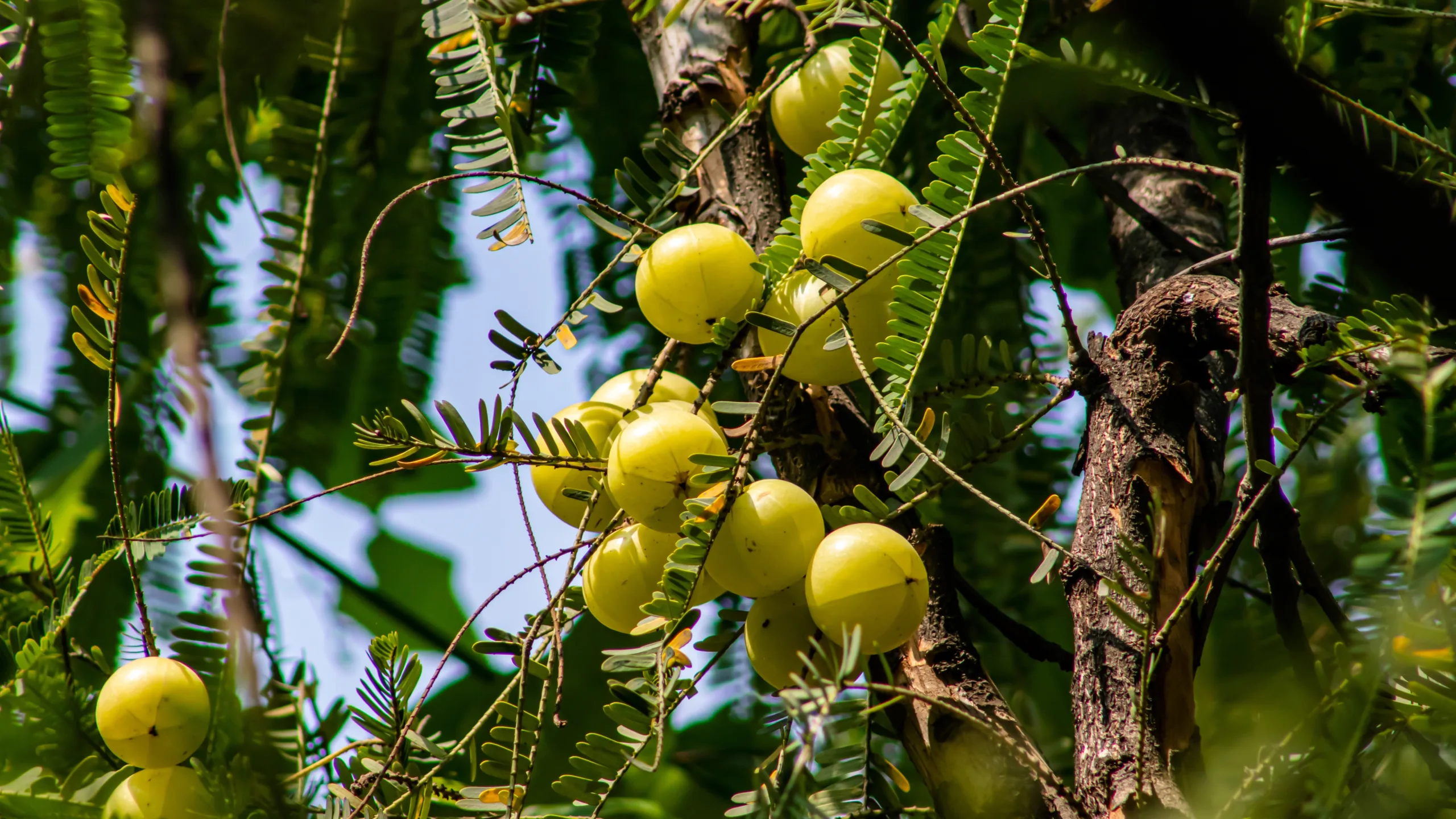
Amla (Phyllanthus emblica), commonly known as Indian Gooseberry, is a small, deciduous tree native to the Indian subcontinent. It belongs to the Phyllanthaceae family and is renowned for its rich vitamin C content. Amla has been utilized extensively in traditional medicine, especially in Ayurveda, for its various therapeutic properties. It is considered one of the most important herbs for promoting overall health, supporting the immune system, and enhancing skin, hair, and digestive health.
Amla Scientific Names
- Kingdom: Plantae
- Phylum: Angiosperms
- Class: Eudicots
- Order: Malpighiales
- Family: Phyllanthaceae
- Genus: Phyllanthus
- Species: Phyllanthus emblica
Amla Common Names
- English: Indian Gooseberry, Amla
- Sanskrit: Amalaki, Dhatri
- Hindi: Amla
- Tamil: Nellikkai
- Telugu: Usirikaya
- Bengali: Amloki
- Marathi: Amla
- Malayalam: Nellikai
Daily Routine & Simple Home Uses
- Fresh Amla Juice or Drink: Crush or blend fresh Amla fruit. Dilute in water (or warm water) and drink in the morning — supports immunity, digestion, and natural detox.
- Amla Powder (Churna): Mix ½–1 teaspoon of Amla powder in warm water or an herbal drink daily for long-term wellness.
- Amla Kadha / Herbal Decoction: Combine dried Amla pieces with herbs like ginger, cinnamon, or Tulsi; boil and sip as a tonic — helpful in seasonal wellness or to boost digestion.
- Amla in Diet: Add pickled or raw Amla to meals. Amla murabba/candies are traditional, but fresh or lightly cooked Amla can also be part of everyday food.
- Hair Oil / Mask: Use Amla-conditioned oil, or mix Amla powder with water or coconut oil to make a hair mask. This supports stronger, shiny hair.
- Face Mask / Skin Use: Mix Amla powder with rose water or yogurt to make a gentle face pack. This helps brighten skin, regulate oil, and provide antioxidant protection.
Amla Uses
- Immune System Boosting - Amla is rich in Vitamin C, which helps in strengthening the immune system and fighting infections.
- Digestive Health - Known to improve digestion, Amla serves as a mild laxative, enhancing bowel movement and promoting gut health.Known to improve digestion, Amla serves as a mild laxative, enhancing bowel movement and promoting gut health.
- Skin Health - Amla is commonly used in cosmetics for its ability to rejuvenate skin cells, reduce signs of aging, and treat pigmentation issues.
- Liver Health - Traditionally used as a detoxifier, Amla is thought to support liver function by promoting the excretion of toxins.
- women health - Amla supports women’s health by balancing hormones, boosting lactation, and easing PCOS symptoms. It improves immunity, regulates periods, and nourishes the body with natural strength.
Phytochemical Constituents
Amla is rich in a variety of bioactive compounds that contribute to its medicinal properties. Key phytochemicals include:
- Vitamin C (Ascorbic Acid)
- Polyphenols: Gallic acid, Ellagic acid, Quercetin
- Flavonoids: Rutin, Myricetin
- Tannins: Emblicanin A, Emblicanin B
- Minerals: Calcium, Phosphorus, Iron
- Essential Oils: Terpenes, Fatty acids
References
- Ayurvedic Pharmacopoeia of India (API), Govt. of India.
- Sharma, P., & Sharma, S. (2015). "Pharmacological properties of Phyllanthus emblica (Amla) and its health benefits." Journal of Ethnopharmacology, 160, 195-204.
- Gupta, S., & Nair, A. (2012). "Amla (Indian gooseberry) as a therapeutic agent: A review." Journal of Natural Products and Resources, 2(2), 148-154.
- Chopra, R.N., Nayar, S.L., & Chopra, I.C. (1956). Glossary of Indian Medicinal Plants. CSIR, New Delhi.
- "Phytochemical analysis and biological activities of Phyllanthus emblica." (2019). Pharmacognosy Reviews, 13(25), 55-60.
- World Health Organization (WHO). (2002). "Amla in the Treatment of Diabetes and Skin Disorders." Traditional Medicine Use in South Asia.
- “Phytochemistry and ethnomedicinal qualities of metabolites from Phyllanthus emblica L.” — ScienceDirect review.
- PositiveHealth.com — “Amalaki: The Amazine Indian Gooseberry” describing immune, liver, digestive benefits.
- Medicine.net — Overview of health benefits of amla powder.
- WebMD — Indian Gooseberry uses & evidence.
- DrShardaAyurveda.com — Traditional Ayurvedic use, preparation forms, and precautions.
- Bimbima.com — Amla powder health benefits: digestion, skin, immunity, hair.
- Dabur.com — Nutritional content, hair & skin uses, anti-aging benefits of Amla.



 My Account
