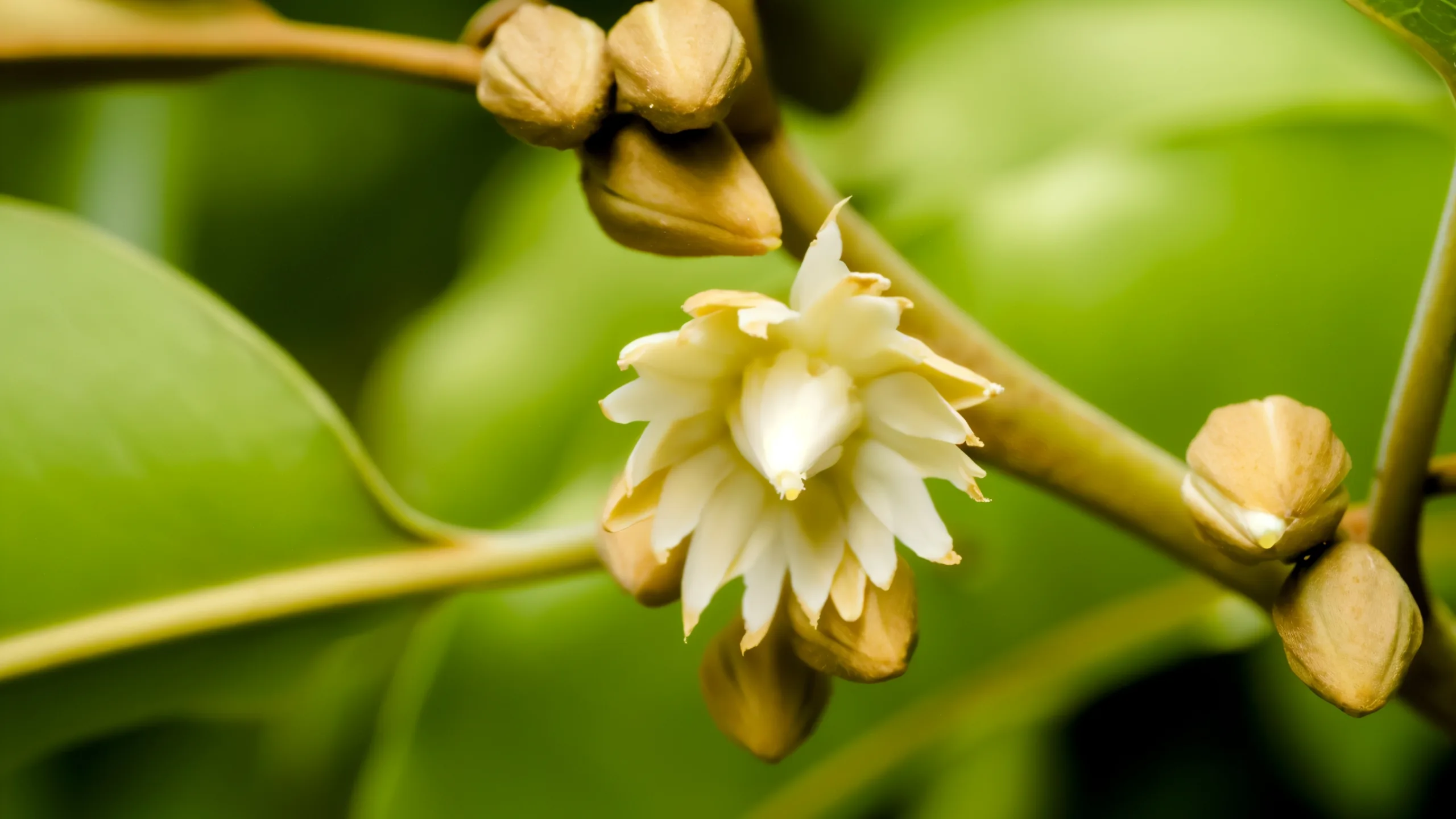
Borsali, scientifically known as Mimusops elengi L., is an evergreen tree belonging to the Sapotaceae family. It is also known as Bakula, Spanish Cherry, and Bulletwood Tree. The tree is traditionally valued in Indian systems of medicine, particularly for its bark, flowers, and other plant parts used in herbal preparations. Borsali contains naturally occurring phytochemicals such as tannins, flavonoids, triterpenoids, and other plant compounds.
bakul tree scientific name
- Kingdom: Plantae
- Clade: Angiosperms
- Clade: Eudicots
- Order: Ericales
- Family: Sapotaceae
- Genus: Mimusops
- Species: Mimusops elengi
Mimusops elengi common name
- English: Spanish Cherry, Bulletwood Tree
- Sanskrit: Bakula
- Hindi: Maulsari / Borsali
- Tamil: Magizhamboo
- Telugu: Pogada
- Malayalam: Elanji
- Bengali: Bokul
- Marathi: Bakul
Mimusops elengi Traditional Uses
Oral and Dental Care:
Borsali bark and flowers have a history of traditional use in oral-care preparations because of their astringent properties. Bark-based preparations have also been traditionally used for gums and oral hygiene.
Digestive Use:
Borsali bark has traditionally been used in some Indian herbal preparations for
digestive discomfort and loose stools. Traditional use should not be considered proof of treatment for gastrointestinal diseases.
Traditional External Use:
Bark and other plant parts have been used traditionally in external herbal preparations for skin and local-care purposes.
Traditional Women's Health Use:
Borsali has been mentioned in traditional medicinal practices for women's health. Such traditional uses should be distinguished from modern clinical evidence.
Traditional Respiratory Use:
Borsali has also been used traditionally in certain herbal preparations for cough and throat-related discomfort.
Phytochemical Constituents
Mimusops elengi contains a range of naturally occurring phytochemicals. Reported constituents include:
- Tannins—important plant compounds associated with the astringent character of the bark.
- Triterpenoids—including compounds such as lupeol and related triterpenoid constituents reported in different plant parts.
- Flavonoids—plant polyphenols reported in various extracts.
- Saponins—naturally occurring compounds found in some plant extracts.
- Sterol compounds—including phytosterols reported in Borsali.
- Other plant compounds—the phytochemical profile can vary depending on the plant part and extraction method.
Which Parts of Borsali Are Traditionally Used?
Different parts of
Mimusops elengi, including the bark, flowers, fruits and seeds, have been used in traditional herbal practices. The bark is particularly noted in traditional literature for its astringent character and use in herbal preparations.
Safety and Precautions
Borsali should be used according to the formulation, product instructions or guidance from a qualified healthcare professional. Evidence for many traditional uses may be based on traditional practice or laboratory research rather than well-established human clinical studies. Pregnant or breastfeeding individuals, children, people with medical conditions, or those taking regular medicines should seek appropriate professional advice before using concentrated herbal preparations.
References
Ayurvedic Pharmacopoeia of India, Govt. of India, Ministry of AYUSH. Part I, Vol. II, p. 119–121.
Kirtikar, K.R., & Basu, B.D. (1935). Indian Medicinal Plants, Volume II. Allahabad: Lalit Mohan Basu, pp. 1585–1587.
Nadkarni, K.M. (1976). Indian Materia Medica, Vol. I. Popular Prakashan, Bombay.
The Wealth of India: A Dictionary of Indian Raw Materials and Industrial Products – Raw Materials, Vol. VI, Publications and Information Directorate, CSIR, New Delhi.
Rao, K. S., & Sreeramulu, S. H. (2007). "Antibacterial activity of Mimusops elengi bark extract against dental pathogens." Indian Journal of Dental Research, 18(4), 148–151.
Patil, V.M., et al. (2010). "Phytochemical and pharmacological review on Mimusops elengi." International Journal of Pharmaceutical Sciences and Research, 1(12), 65–72.
European Pharmacopoeia, 10th Edition, Council of Europe.
Chopra, R.N., Nayar, S.L., & Chopra, I.C. (1956). Glossary of Indian Medicinal Plants. CSIR, New Delhi.
Frequently Asked Questions
What is Borsali?
Borsali is the common Indian name for Mimusops elengi, an evergreen tree traditionally used in herbal practices.
What is the scientific name of Borsali?
The botanical name is Mimusops elengi L.
What is Borsali also called?
It is also known as Bakula, Bakul, Spanish Cherry, and Bulletwood Tree.
Which parts of Borsali are traditionally used?
Bark, flowers, fruits, and seeds have been used in different traditional herbal preparations.
What compounds are found in Borsali?
Borsali contains tannins, flavonoids, triterpenoids, saponins, and other naturally occurring plant compounds.
Content by: Polycare Herbals Editorial Team
Specialization: Ayurvedic and Herbal Wellness Information



 My Account
