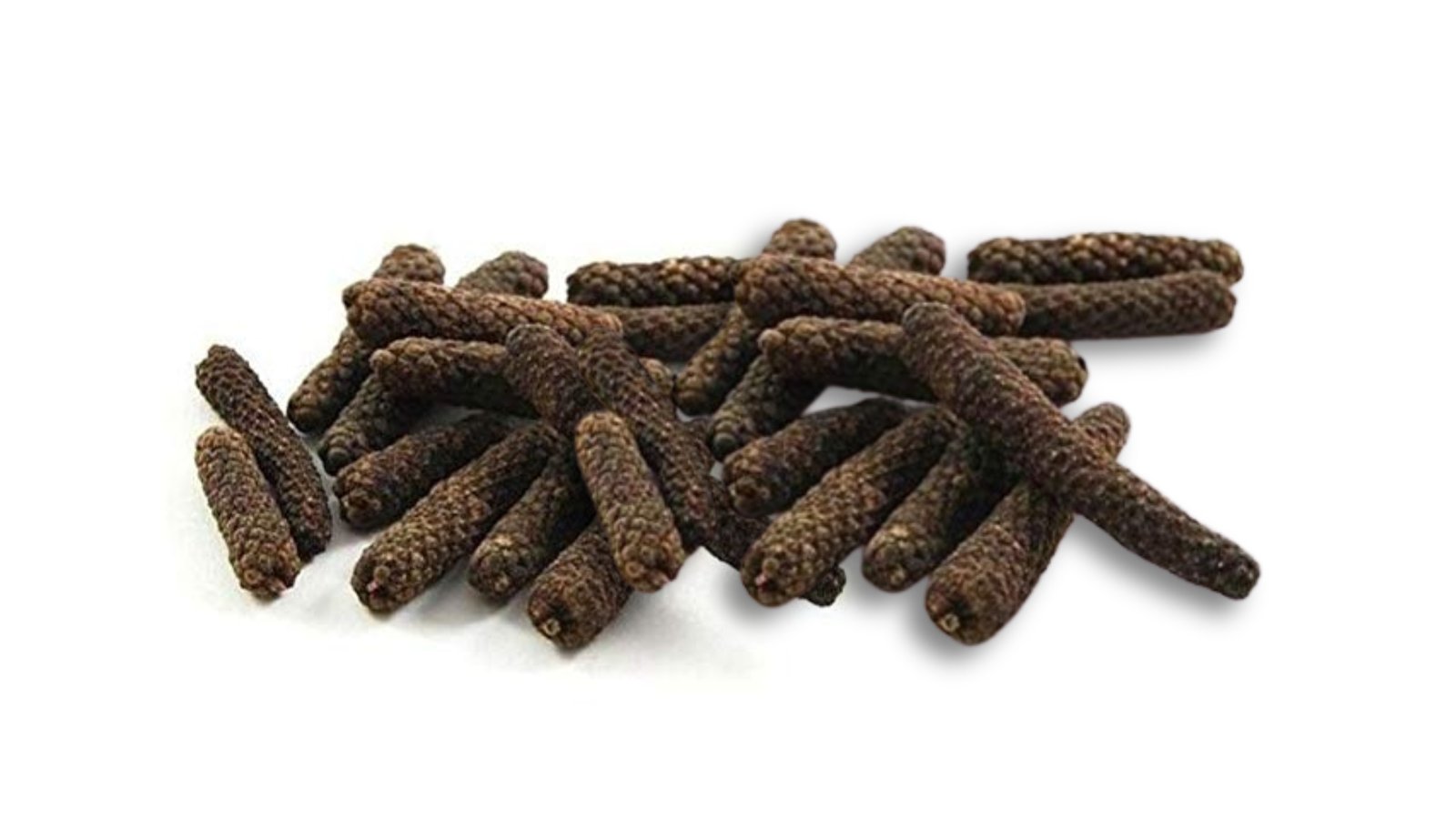
Chavak (also called Chavya or Chaba) is a pungent medicinal and spice plant traditionally used in Ayurveda and folk medicine. It is a climbing vine valued for its dried fruit and roots, which are used both as a culinary spice and a medicinal herb for digestive balance, respiratory support, and general wellness. In Ayurveda, it is often included in formulations such as Trikatu due to its warming and pungent properties.
Scientific Classification
- Kingdom: Plantae
- Order: Piperales
- Family: Piperaceae
- Genus: Piper
- Species: Piper retrofractum Vahl
- Synonyms: Piper chaba Hunter, Piper officinarum (Miq.) C. DC.
Common Names
- English: Chavak, Java long pepper, Javanese long pepper
- Sanskrit: चविका (Chavika)
- Hindi: चव्या (Chavya), चवक (Chavak)
- Gujarati: ચવક (Chavka)
- Bengali: চই (Chei)
- Malayalam: ചവക (Chavaka)
- Telugu: చవ్యము (Chavyamu)
Traditional and Medicinal Uses
- Digestive and Metabolic Support: Chavak has been traditionally used in Ayurveda for enhancing digestion (Deepana) and helping appetite stimulation (Rochana). It supports the digestive fire (Agni) and helps relieve bloating and indigestion.
- Respiratory Support: In folk remedies, Chavak is used as part of herbal blends for clearing respiratory congestion and supporting overall respiratory comfort.
- Balancing Doshas: Chavak’s pungent and warming qualities help balance Kapha and Vata doshas while increasing Pitta due to its heating nature.
- Culinary and Spice Use: Apart from medicinal applications, Chavak fruits/roots are used as a pungent spice in traditional dishes, particularly in Southeast Asian and South Asian cuisines.
Phytochemical Constituents
- Alkaloids: Piperine, Piplartine, Chabamide
- Sterols: β-Sitosterol
- Amides and Phenolics: Phenylpropanoid derivatives & amide glucosides
- Flavonoids, Saponins, Tannins
- Essential Oils: Present in fruits and stems, contributing to aromatic and antimicrobial activity
References
- Ayurvedic Pharmacopoeia of India (API), Govt. of India.
- Charaka Samhita, Sushruta Samhita, Classical Ayurvedic Texts.
- Lalekiya, T., Wardani, N.K.S.L. (2021). A review of phytochemical and pharmacological studies of Piper retrofractum Vahl. Journal Pharmaceutical Science and Application.
- Mishra, S.S. (1964). Phytochemical Investigation of Piper chaba. Phytochemistry.
- Islam, M.T. et al. (2020). Chemical profile, traditional uses and biological activities of Piper chaba. Journal of Ethnopharmacology.
- Peer-reviewed phytochemical and pharmacological studies on Piper retrofractum and related Piperaceae species, PubMed and ScienceDirect databases.



 My Account
