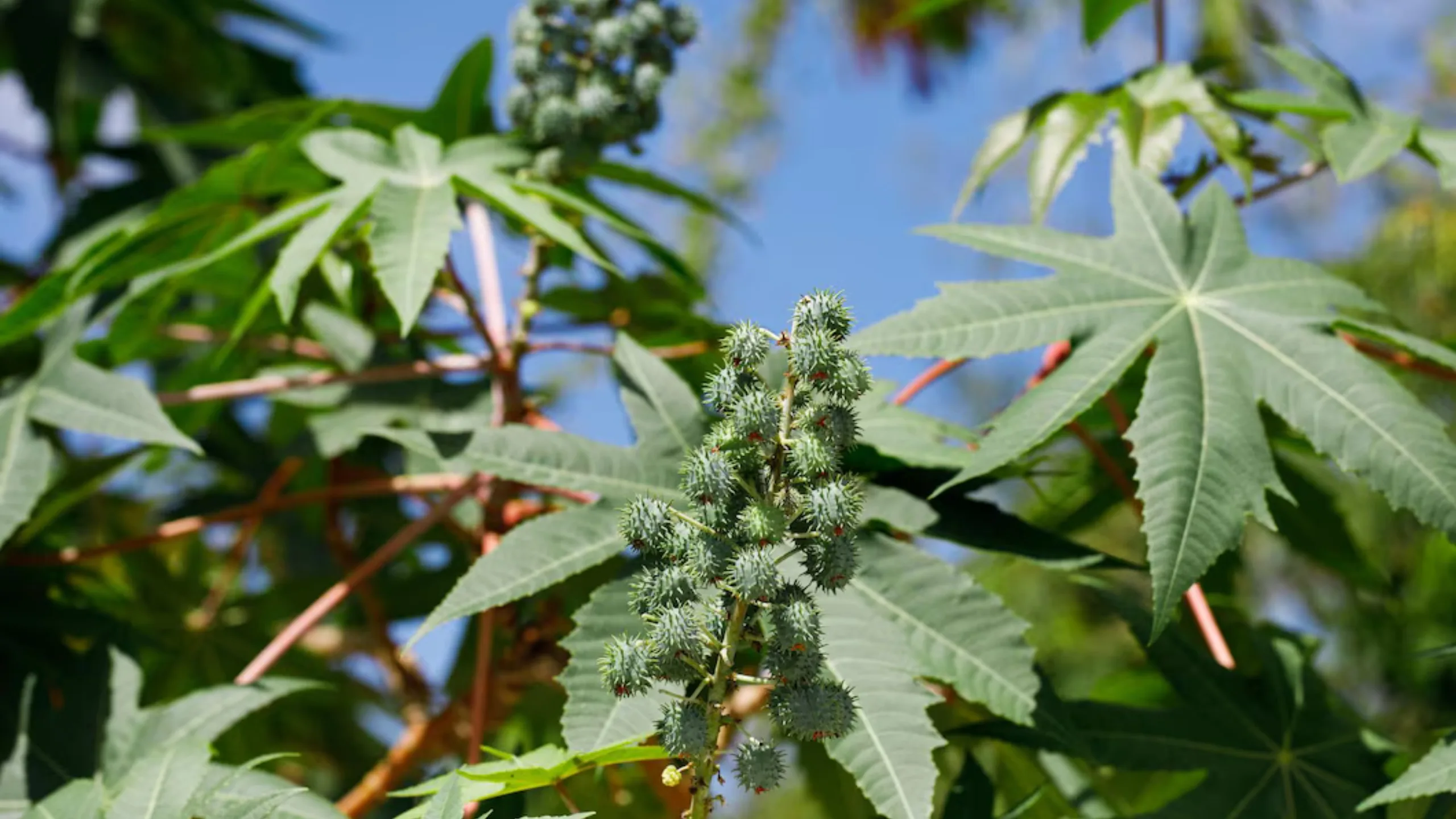
Eranda, scientifically known as Ricinus communis L., is a fast-growing herb, shrub, or small tree belonging to the Euphorbiaceae family. It is commonly known as the castor plant and is widely cultivated and naturalized in warm regions around the world. The plant produces seeds from which castor oil is obtained. Castor oil has long-standing uses in traditional medicine and is also used in pharmaceutical, cosmetic, and industrial applications.
In Ayurveda, Eranda is a recognized traditional medicinal plant, with different parts of the plant used in herbal preparations. Castor oil is particularly associated with traditional digestive and external applications. The plant contains ricinoleic acid and other naturally occurring compounds, while the raw seeds also contain the toxic protein ricin and therefore should not be treated as equivalent to processed castor oil.
Scientific Classification
- Kingdom: Plantae
- Phylum/Clade: Angiosperms
- Clade: Eudicots
- Order: Malpighiales
- Family: Euphorbiaceae
- Genus: Ricinus
- Species: Ricinus communis L.
Common Names
- English: Castor Plant
- Sanskrit: Eranda
- Hindi: Arand
- Tamil: Amanakku
- Telugu: Amudamu
- Bengali: Rer
- Gujarati: Andar
- Marathi: Erand
Traditional Uses of Eranda
Eranda has a long history of use in Ayurveda and other traditional medicine systems. Its traditional applications vary according to the plant part, preparation, and formulation.
- Digestive and Bowel Use: Castor oil has traditionally been used as a laxative or purgative preparation to support bowel evacuation. The strength and effect of castor oil can vary, so it should be used according to appropriate product directions.
- External Use: Eranda leaves and castor oil have traditionally been used in external herbal preparations for local comfort, skin care, and areas of discomfort.
- Muscle and Joint Comfort: Traditional Ayurvedic preparations may use Eranda or its oil in applications associated with joint, muscle, and inflammatory discomfort. Traditional use does not establish effectiveness for specific inflammatory diseases.
- Respiratory Traditional Use: Some Ayurvedic preparations use different parts of Eranda in formulations associated with respiratory and Kapha-related traditional concepts. These traditional applications should not be presented as a treatment for asthma or other respiratory diseases.
- Traditional Ayurvedic Formulations: Eranda may be used in different classical or proprietary herbal preparations depending on the plant part and intended formulation.
Castor Oil and Castor Seeds: What Is the Difference?
Castor oil is obtained from the seeds of Ricinus communis, but castor oil should not be considered the same material as raw castor seeds.
Raw castor seeds contain ricin, a highly toxic protein. The CDC identifies ricin as a natural poison found in castor beans.
Commercially processed castor oil is a separate material and is primarily composed of triglycerides rich in ricinoleic acid. Therefore, traditional or commercial uses of properly processed castor oil should not be used as a reason to consume raw castor seeds.
For safety, raw castor seeds should never be used as a home remedy or substituted for a properly manufactured castor oil preparation.
Phytochemical Constituents of Eranda
Ricinus communis contains several naturally occurring plant compounds, and the composition varies according to the plant part and preparation.
Castor Oil
Castor oil is particularly rich in ricinoleic acid, along with smaller amounts of other fatty acids. Ricinoleic acid is a characteristic component of castor oil and contributes to its distinctive physical and chemical properties.
Other Plant Constituents
Different parts of the plant have been reported to contain compounds such as
- Flavonoids and phenolic compounds
- Sterol-related compounds such as β-sitosterol
- Terpenoid and triterpenoid compounds
- Ricinine and other plant-derived constituents
Ricin and Safety
Raw castor seeds contain ricin, a highly toxic protein. Ricin is not an appropriate therapeutic constituent and should not be presented as a beneficial phytochemical. The safety of castor oil depends on proper processing and product quality.
What Is Eranda Used For?
Eranda (Ricinus communis) is a traditional Ayurvedic plant mainly associated with castor oil and herbal preparations used for digestive, bowel, and external wellness applications. Different plant parts may have different traditional uses. Modern research has also investigated the plant's chemical constituents and biological activities, but these findings do not establish Eranda as a treatment or cure for a specific human disease.
Eranda Safety and Precautions
Eranda requires particular attention to safety because raw castor seeds contain ricin, a highly toxic protein. Raw castor seeds should not be consumed or used as a home remedy.
Castor oil should be used only in an appropriate, properly manufactured preparation and according to its product directions. Excessive laxative use may cause loose stools, abdominal discomfort, and fluid or electrolyte disturbances.
Pregnant or breastfeeding women, children, people with existing medical conditions, and people taking regular medicines should seek professional advice before using medicinal doses of castor oil or Eranda preparations. Eranda should not replace medical diagnosis or prescribed treatment.
FAQs
What is Eranda?
Eranda is the Ayurvedic name commonly associated with Ricinus communis, the castor plant.
Is Eranda the same as castor oil?
Not exactly. Eranda refers to the plant, while castor oil is the oil obtained from its seeds.
What is castor oil traditionally used for?
Castor oil has traditionally been used mainly for bowel evacuation and in some external herbal preparations.
Are castor seeds safe to eat?
No. Raw castor seeds contain ricin, a highly toxic protein, and should not be consumed.
Which compound is characteristic of castor oil?
Ricinoleic acid is the characteristic major fatty acid of castor oil.
References
Ayurvedic Pharmacopoeia of India (API), Part I, Volume 3, Govt. of India, Ministry of AYUSH.
Indian Materia Medica by K.M. Nadkarni, Vol. 1, Popular Prakashan, Mumbai.
Chopra, R.N., Nayar, S.L., & Chopra, I.C. (1956). Glossary of Indian Medicinal Plants. CSIR, New Delhi.
Duke, J.A. (2002). Handbook of Medicinal Herbs. CRC Press.
Prasad, R., & Raju, B. (2009). "Phytopharmacology of Ricinus communis L. – A review." International Journal of Pharmaceutical Sciences Review and Research, 1(2), 1-6.
Singh, A., & Singh, D. (2010). "A review on traditional uses, phytochemistry, and pharmacological activities of Ricinus communis." Journal of Pharmacognosy and Phytotherapy, 2(5), 55-60.
European Pharmacopoeia, 10th Edition, Council of Europe.
Sharma, P.V. (2006). Dravyaguna Vijnana, Vol. II, Chaukhamba Bharati Academy, Varanasi.
Content by: Polycare Herbals Editorial Team
Specialization: Ayurvedic and Herbal Wellness Information



 My Account
