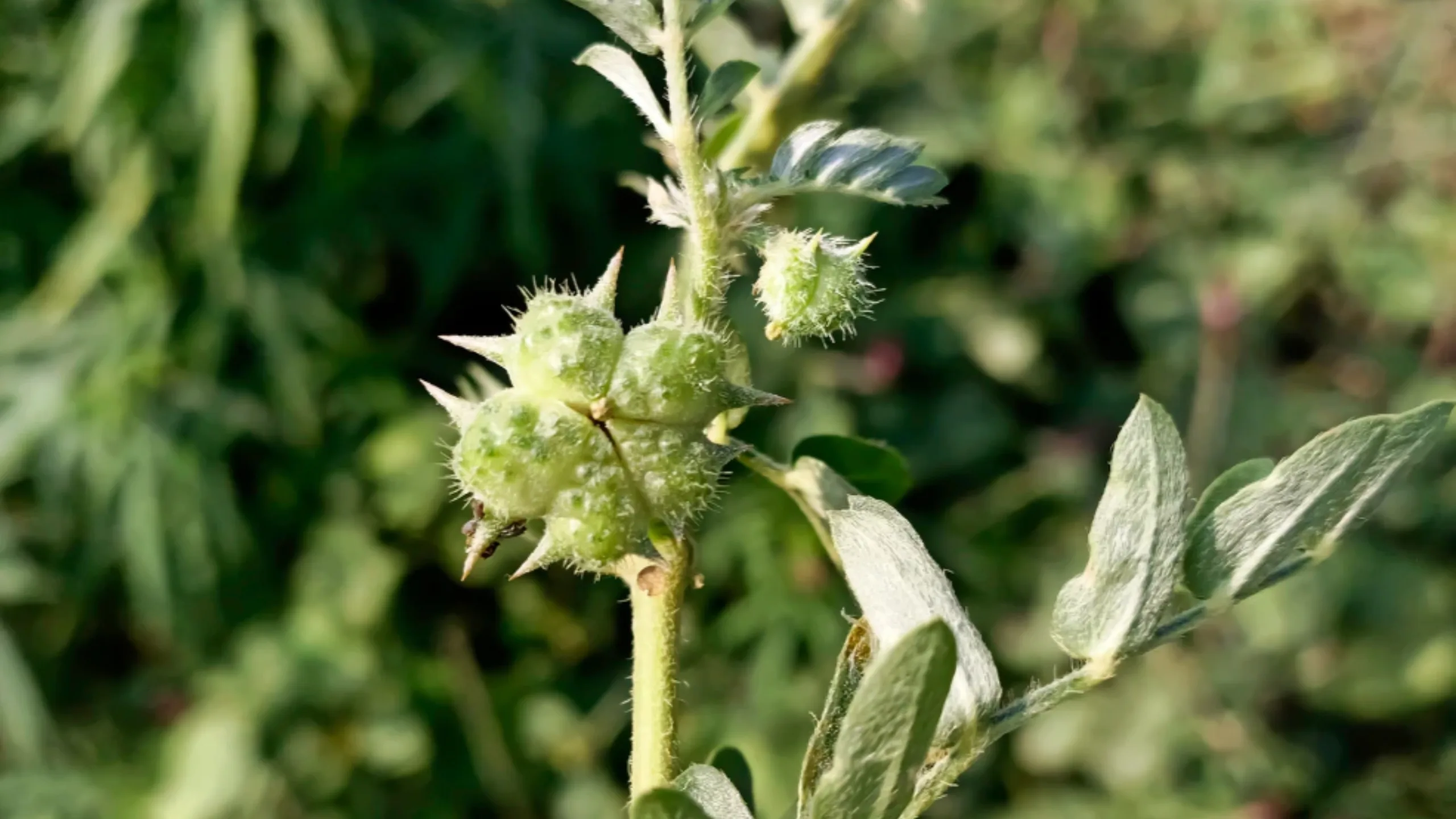
Gokharu (Tribulus terrestris) is a tiny flowering herb that has been a staple in traditional Ayurvedic, Unani, and Chinese healing practices. It is valued for its potential to enhance reproductive health, support urinary tract health, and promote vitality and strength. Known for its adaptogenic and aphrodisiac properties, Gokshura is often found in formulations for male reproductive disorders, kidney stones, and muscle development.
Gokharu Scientific Names
- Kingdom: Plantae
- Phylum: Angiosperms
- Class: Eudicots
- Order: Zygophyllales
- Family: Zygophyllaceae
- Genus: Tribulus
- Species: Tribulus terrestris
Gokharu Common Names
- English: Puncture Vine, Caltrop
- Sanskrit: Gokshura
- Hindi: Gokharu
- Tamil: Nerunjil
- Telugu: Palleru
- Kannada: Neggilamullu
- Marathi: Gokharu
- Bengali: Gokhuri
Gokharu Uses
- Reproductive Health - Used to enhance male libido, sperm count, and testosterone levels, Helps manage erectile dysfunction and premature ejaculation.
- Urinary Health - Acts as a diuretic and is beneficial in urinary tract infections, dysuria, and kidney stones, Traditionally used for mutrakrichha (painful urination).
- Strength and Muscle Development - Used in formulations to increase physical performance, muscle mass, and endurance, Common in herbal bodybuilding supplements.
- Anti-inflammatory and Analgesic - Offers natural support to ease joint and muscle discomfort while helping to combat inflammation.
Phytochemical Constituents
Gokshura contains several active compounds that contribute to its pharmacological actions:
- Saponins: Protodioscin, Dioscin, Terrestrosin A, Terrestrosin B
- Alkaloids: Harman, Norharman
- Flavonoids: Kaempferol, Quercetin
- Sterols: Beta-sitosterol, Stigmasterol
- Other Compounds: Tannins, Resins, Essential Oils
References
Ayurvedic Pharmacopoeia of India, Part I, Volume I, Government of India, Ministry of AYUSH.
Tripathi, I. (2013). Dravyaguna Vigyan (Vol. 2), Chaukhambha Sanskrit Pratishthan, Delhi.
Chhatre, S., Nesari, T., Somani, G., Kanchan, D., & Sathaye, S. (2014). "Phytopharmacological overview of Tribulus terrestris." Pharmacognosy Reviews, 8(15), 45–51.
Gauthaman, K., Adaikan, P.G., & Prasad, R.N.V. (2002). "Aphrodisiac properties of Tribulus terrestris extract (Protodioscin): Role of androgens." Life Sciences, 71(12), 1385–1396.
European Medicines Agency. (2017). Assessment report on Tribulus terrestris L., EMA/HMPC/620200/2013.
The Unani Pharmacopoeia of India, Part I, Volume IV, Government of India, Ministry of AYUSH.
Chopra, R.N., Nayar, S.L., & Chopra, I.C. (1956). Glossary of Indian Medicinal Plants. Council of Scientific & Industrial Research (CSIR), New Delhi.



 My Account
