Free Shipping On Above Order Value Rs. 500
Free Shipping On Above Order Value Rs. 500


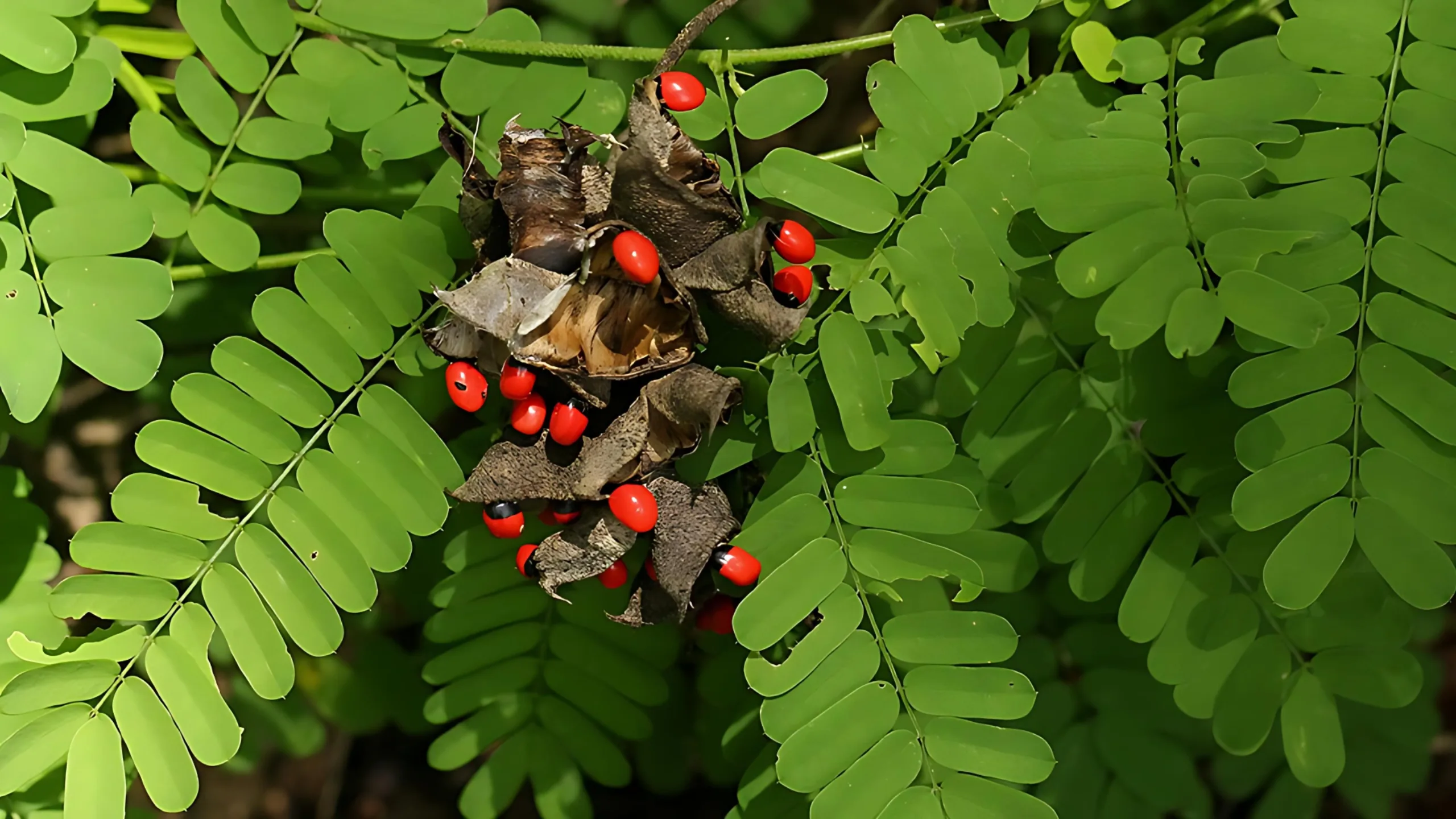
Gunja (Abrus precatorius) is a slender, perennial climber known for its bright red seeds with a black spot, often referred to as “rosary peas.” Belonging to the Fabaceae family, Gunja is known for its potent medicinal and toxic properties. In traditional Ayurvedic medicine, it is used in extremely minute quantities for treating various ailments like hair fall, skin diseases, and nervous disorders, after undergoing a specific detoxification process called shodhana.
Ayurvedic Pharmacopoeia of India (API), Part I, Vol. III. Government of India, Ministry of AYUSH.
Bhavaprakasha Nighantu, Gunjaadi Varga – Commentary by Sri Brahmashankara Mishra.
Chopra, R.N., Nayar, S.L., & Chopra, I.C. (1956). Glossary of Indian Medicinal Plants. CSIR, New Delhi.
M. P. Sharma, R. Yelne, T. J. Dennis. (2002). Database on Medicinal Plants Used in Ayurveda. CCRAS, Ministry of AYUSH.
Singh, S., & Pandey, S. (2012). "Toxicological and pharmacological profile of Abrus precatorius L.: A review." International Journal of Pharmacy & Life Sciences, 3(6), 1614–1621.
Bhalla, T. N., & Gupta, M. B. (1970). "Pharmacological investigations on Abrus precatorius." Indian Journal of Pharmacology, 2(1), 7–12.
World Health Organization (WHO) Monographs on Selected Medicinal Plants, Vol. 3.

Moving your card details to a much more secured place

100% Payment Protection. Easy Return Policy

Fast, reliable delivery from global warehouses

 My Account
