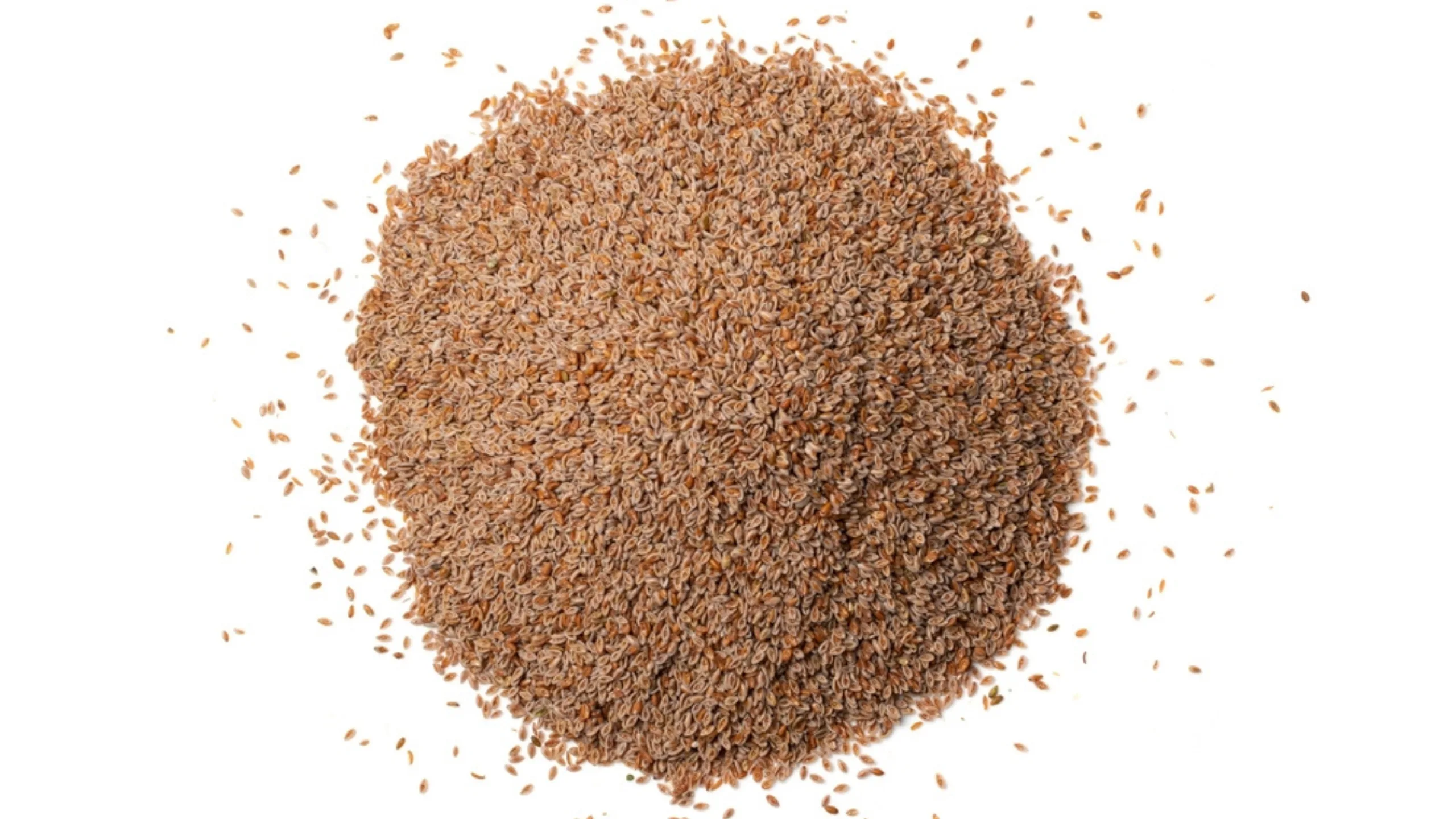
Isabgol (Plantago ovata Forssk.) is a small herbaceous plant native to India and the Mediterranean region. The seed husk, commonly known as psyllium husk, is widely used for its high mucilage content, primarily as a natural laxative and dietary fiber supplement. It is renowned for its gentle yet effective action in managing constipation, irritable bowel syndrome (IBS), and cholesterol levels.
Isabgol Scientific Name
- Kingdom: Plantae
- Phylum: Angiosperms
- Class: Eudicots
- Order: Lamiales
- Family: Plantaginaceae
- Genus: Plantago
- Species: Plantago ovata Forssk
Isabgol Common Name
- English: Psyllium Husk, Blond Psyllium
- Sanskrit: Ashwakarna, Shankhapushpi
- Hindi: Isabgol
- Gujarati: Isabgol
- Marathi: Isabgol
- Tamil: Isappukol
- Telugu: Isapagola
Isabgol Uses
- Digestive Health - Acts as a bulk-forming laxative by absorbing water and forming a gel-like mass that eases bowel movement.
- Irritable Bowel Syndrome (IBS) - Helps in managing IBS symptoms, particularly alternating constipation and diarrhea, by regulating bowel movements.
- Cholesterol and Heart Health - Aids in reducing LDL (bad cholesterol) by binding bile acids and lowering their reabsorption.
- Diabetes Support - Delays glucose absorption, helping in better glycemic control for Type 2 diabetes patients.
- Weight Management - Increases satiety and reduces hunger cravings by forming a viscous gel, which slows digestion.
Phytochemical Constituents
Isabgol contains high amounts of soluble and insoluble fiber, mucilage, and several active phytochemicals:
- Mucilage (20–30%) – Primary active agent; forms a gelatinous mass on hydration
- Aucubin – Anti-inflammatory, antimicrobial
- Plantamajoside – Antioxidant and hepatoprotective properties
- Iridoid glycosides – Contribute to mild laxative effect
- Tannins, Fixed Oils, Proteins, Polysaccharides
References
Ayurvedic Pharmacopoeia of India (API) – Govt. of India, Part I, Vol. II, Ministry of AYUSH.
Indian Herbal Pharmacopoeia (2002), Indian Drug Manufacturers’ Association (IDMA) & RRL, CSIR.
Vohora, S.B., & Khan, M.S.Y. (1978). "Analgesic and anti-inflammatory studies on Plantago ovata." Planta Medica, 34, 225–228.
Marlett, J.A., & Fischer, M.H. (2003). "The active fraction of psyllium husk." Proceedings of the Nutrition Society, 62(1), 207–209.
Anderson, J.W. et al. (2000). "Long-term cholesterol-lowering effects of psyllium as an adjunct to diet therapy in the treatment of hypercholesterolemia." The American Journal of Clinical Nutrition, 71(6), 1433–1438.
The European Pharmacopoeia, 10th Edition – Council of Europe.
Chopra, R.N., Nayar, S.L., & Chopra, I.C. (1956). Glossary of Indian Medicinal Plants, CSIR, New Delhi.
British Herbal Pharmacopoeia (1996). Psyllium Monograph, British Herbal Medicine Association.


 My Account
