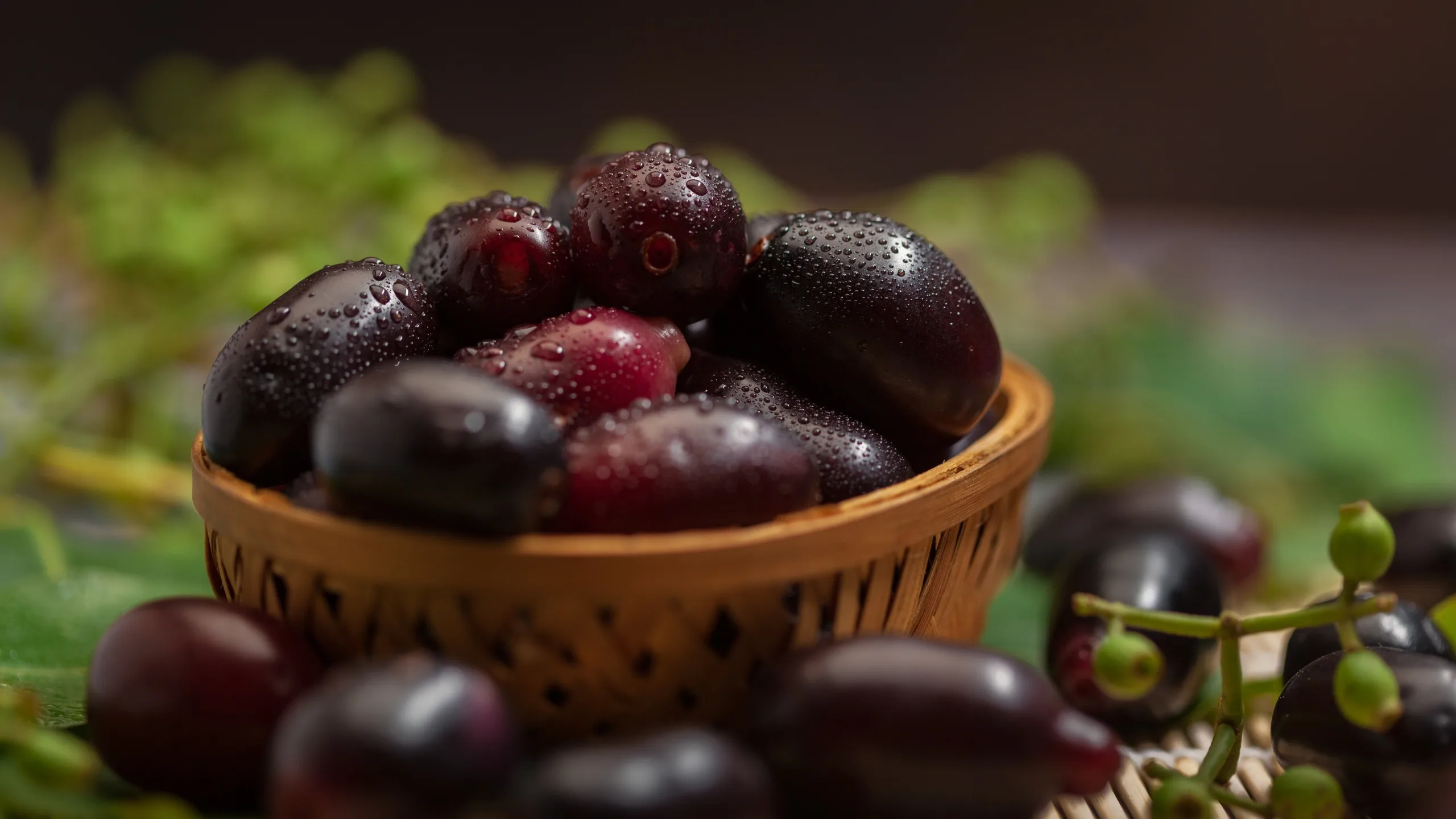
Jamun Beej refers to the dried seeds of the Jamun fruit (also known as Indian Blackberry). The seeds are traditionally dried, powdered, and used for their antidiabetic, astringent, and digestive benefits. Jamun trees are evergreen, medium to large-sized, with dark purple edible fruits rich in antioxidants.
What Are Jamun Beej?
Jamun Beej are the seeds inside the Jamun fruit (Syzygium cumini).
They are dried, cleaned, and powdered to create a potent Ayurvedic formulation known as:
- Jamun Beej Churna
- Jamun Seed Powder
- Syzygium Cumini Seed Powder
These seeds contain:
- Jamboline
- Jambosine
- Ellagic acid
- Alkaloids & flavonoids
These compounds make the seeds extremely beneficial for pancreatic health, blood glucose regulation, digestion, and urinary balance.
Read More: Jamun Beej Benefits for Diabetes
How to Use Jamun Beej?
1. Jamun Beej Powder (Most Common)
Take ½ teaspoon (2–3 g) with warm water before meals.
2. Jamun Seed Capsules
Usually 500 mg to 1000 mg per serving (as per product label).
3. Jamun Beej + Amla Combination
For improved sugar and digestion support.
4. External Paste for Skin
Jamun seed powder + rose water → anti-acne paste.
Scientific Classification
- Kingdom: Plantae
- Phylum: Angiosperms
- Class: Eudicots
- Order: Myrtales
- Family: Myrtaceae
- Genus: Syzygium
- Species: S. cumini
Common Names
- English: Black Plum Seed, Java Plum Seed
- Hindi: Jamun Beej
- Sanskrit: Jambu
- Gujarati: Jamfal Beej
- Marathi: Jambhul Beej
- Tamil: Naaval Pazham Vidhai
- Telugu: Neredu Ginjaloo
Traditional and Medicinal Uses
- Blood Sugar Regulation - Traditionally used in Ayurveda as an effective remedy for managing diabetes and regulating blood glucose.
- Digestive Health - Acts as an astringent and digestive stimulant, used in indigestion, diarrhea, and dysentery.
- Oral Health - Powdered seeds are used to maintain oral hygiene and treat bleeding gums.
- Urinary Disorders - Used for reducing excessive urination and balancing urinary issues linked to high sugar levels.
- Antioxidant and Anti-inflammatory - Rich in polyphenols that protect cells and reduce internal inflammation.
Phytochemical Constituents
Jamun seeds are a powerhouse of phytoconstituents:
- Jamboline and Jambosine – Alkaloids known for hypoglycemic action
- Ellagic acid – Antioxidant and anticancer potential
- Gallic acid and Flavonoids – Antioxidant, anti-inflammatory properties
- Tannins and Saponins – Astringent and antidiarrheal action
- Terpenoids and Anthocyanins – Protect against oxidative stress
Safety & Side Notes
- Suitable for daily use in Ayurvedic dosage.
- Pregnant/lactating women should consult their physician.
- Not recommended for people with low sugar levels.
- Always use pure, properly dried, and authenticated seeds.
References
- Ayurvedic Pharmacopoeia of India, Part-I, Volume IV, Ministry of AYUSH, Govt. of India.
- Sharma, P. V. (2003). Dravyaguna Vigyan, Vol. 2. Chaukhambha Bharati Academy.
- Kirtikar, K. R., & Basu, B. D. (2008). Indian Medicinal Plants, Volume III. International Book Distributors.
- Jain, R., et al. (2011). "Hypoglycemic and antioxidant activity of Syzygium cumini seed powder in alloxan-induced diabetic rats." Asian Journal of Pharmaceutical and Clinical Research, 4(3), 35–39.
- Baliga, M. S., et al. (2011). "Scientific validation of the ethnomedicinal properties of the Jamun (Syzygium cumini) fruit and its seed: A review." Journal of Pharmaceutical and Biomedical Sciences, 16(16), 1–6.
- Nadkarni, K. M. (2009). Indian Materia Medica, Vol. I. Bombay Popular Prakashan.
- Ayurvedic Pharmacopoeia of India (API) – Syzygium cumini seeds
- Charaka Samhita – Kapha & Prameha references
- Bhavaprakasha Nighantu – Jamun (Jambu) description
- Journal of Ethnopharmacology – Studies on Jamun seed effects on glucose metabolism
- Indian Journal of Pharmacology – Antioxidant & anti-diabetic activity of Syzygium cumini seeds



 My Account
