Free Shipping On Above Order Value Rs. 500
Free Shipping On Above Order Value Rs. 500


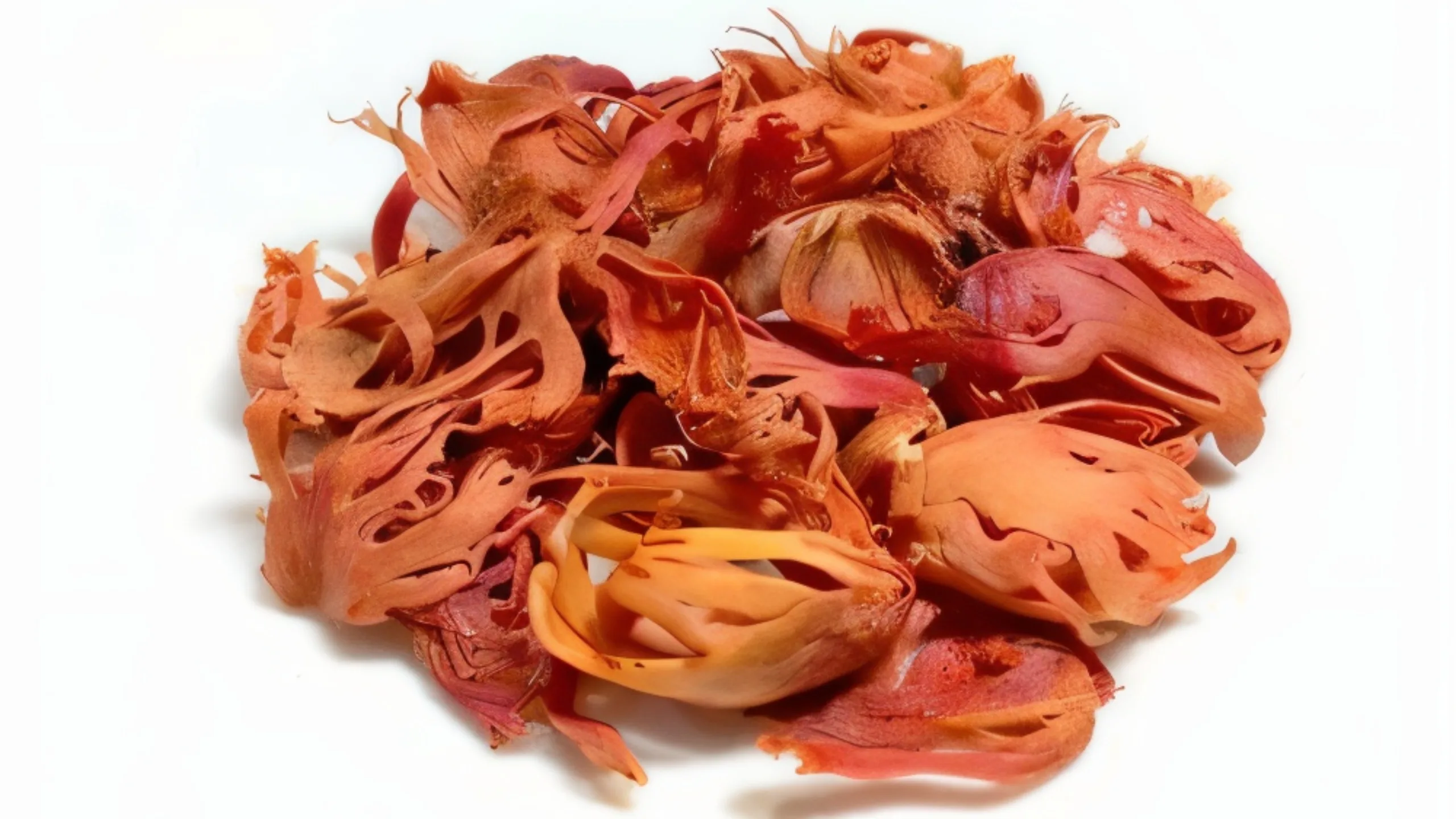
Javitri (Myristica fragrans – Arillus) is the dried lacy covering of the nutmeg seed, commonly known as Mace in English. Although it is extensively grown in tropical locations, it is native to the Spice Islands (Indonesia) and is a member of the Myristicaceae family. Javintri is used as a culinary spice and as a medicinal plant because of its potent aroma.
Among the many bioactive substances and volatile oils found in mace are:
Ayurvedic Pharmacopoeia of India, Part I, Vol. IV, Govt. of India, Ministry of AYUSH.
Nadkarni, K.M. (1976). Indian Materia Medica, Vol 1, Popular Prakashan.
Trease, G.E., & Evans, W.C. (2002). Pharmacognosy, 15th Ed. Saunders.
Pua, T.L., et al. (2020). "Phytochemical properties and medicinal uses of Myristica fragrans (nutmeg and mace)." Journal of Ethnopharmacology, 258, 112907.
European Medicines Agency (EMA). (2011). Assessment report on Myristica fragrans Houtt., European Medicines Agency, Committee on Herbal Medicinal Products.
Rani, P., & Khullar, N. (2004). "Antimicrobial evaluation of some medicinal plants for their anti-enteric potential against multi-drug resistant Salmonella typhi." Phytotherapy Research, 18(8), 670–673.
Chopra, R.N., Nayar, S.L., & Chopra, I.C. (1956). Glossary of Indian Medicinal Plants. CSIR, New Delhi.

Moving your card details to a much more secured place

100% Payment Protection. Easy Return Policy

Fast, reliable delivery from global warehouses

 My Account
