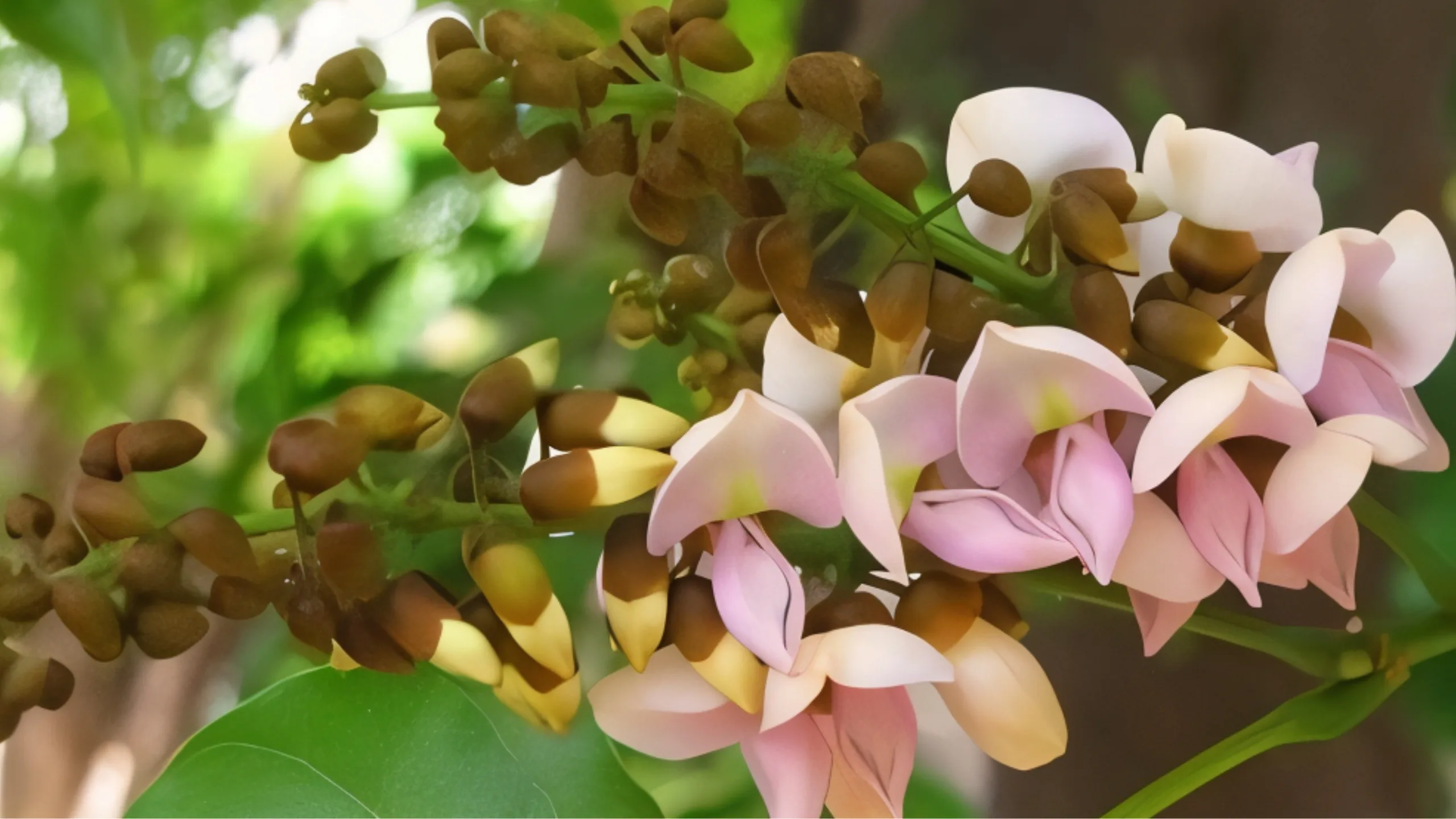
Karanj (Pongamia pinnata) is a medium-sized deciduous tree that grows up to 15–25 meters in height. It has compound pinnate leaves, fragrant purple flowers, and flat brown pods containing oil-rich seeds. Traditionally, Karanj has been used in Ayurveda and Siddha medicine for its anti-inflammatory, antimicrobial, and wound-healing properties.
Scientific Classification
- Kingdom: Plantae
- Phylum: Angiosperms
- Class: Eudicots
- Order: Fabales
- Family: Fabaceae
- Genus: Pongamia
- Species: Pongamia pinnata
Common Names
- English: Indian Beech, Karanja Tree
- Sanskrit: Karanja
- Hindi: Karanj
- Tamil: Pungai
- Telugu: Kanuga
- Bengali: Karanja
- Marathi: Karanj
Traditional and Medicinal Uses
- Wound Healing - The oil and bark extracts help in wound healing and reducing inflammation.
- Digestive Health - Used in Ayurvedic formulations for treating constipation and abdominal bloating.
- Prevents Hair Fall - Strengthens hair roots and reduces hair fall caused by scalp infections.
- Joint and Muscle Pain Relief - Karanja oil is applied topically to alleviate arthritis and muscle pain.
- Antimicrobial & Antifungal - The bioactive compounds in Karanj possess antimicrobial and antifungal properties.
Phytochemical Constituents
Karanj contains a variety of bioactive compounds that contribute to its medicinal properties. Some key phytochemicals include:
- Flavonoids: Pongamol, Pinnatin
- Fixed Oils: Karanjin, Pongapin
- Steroids: β-Sitosterol, Stigmasterol
- Tannins: Catechins
- Glycosides: Pongamoside
References
Ayurvedic Pharmacopoeia of India (API), Govt. of India.
Bhavprakash Nighantu, Chapter on Herbal Remedies.
Sahoo, N., & Manchikanti, P. (2013). "Herbal Medicine: Current Status and the Future." Asian Pacific Journal of Tropical Biomedicine, 3(2), 134-142.
European Pharmacopoeia, 10th Edition, Council of Europe.
Mishra, A., Kumar, S., Bhatt, G., & Srivastava, S. (2017). "Pongamia pinnata: Phytochemistry and Therapeutic Applications." Journal of Ethnopharmacology, 204, 1-15.
Chopra, R.N., Nayar, S.L., & Chopra, I.C. (1956). Glossary of Indian Medicinal Plants. CSIR, New Delhi.



 My Account
