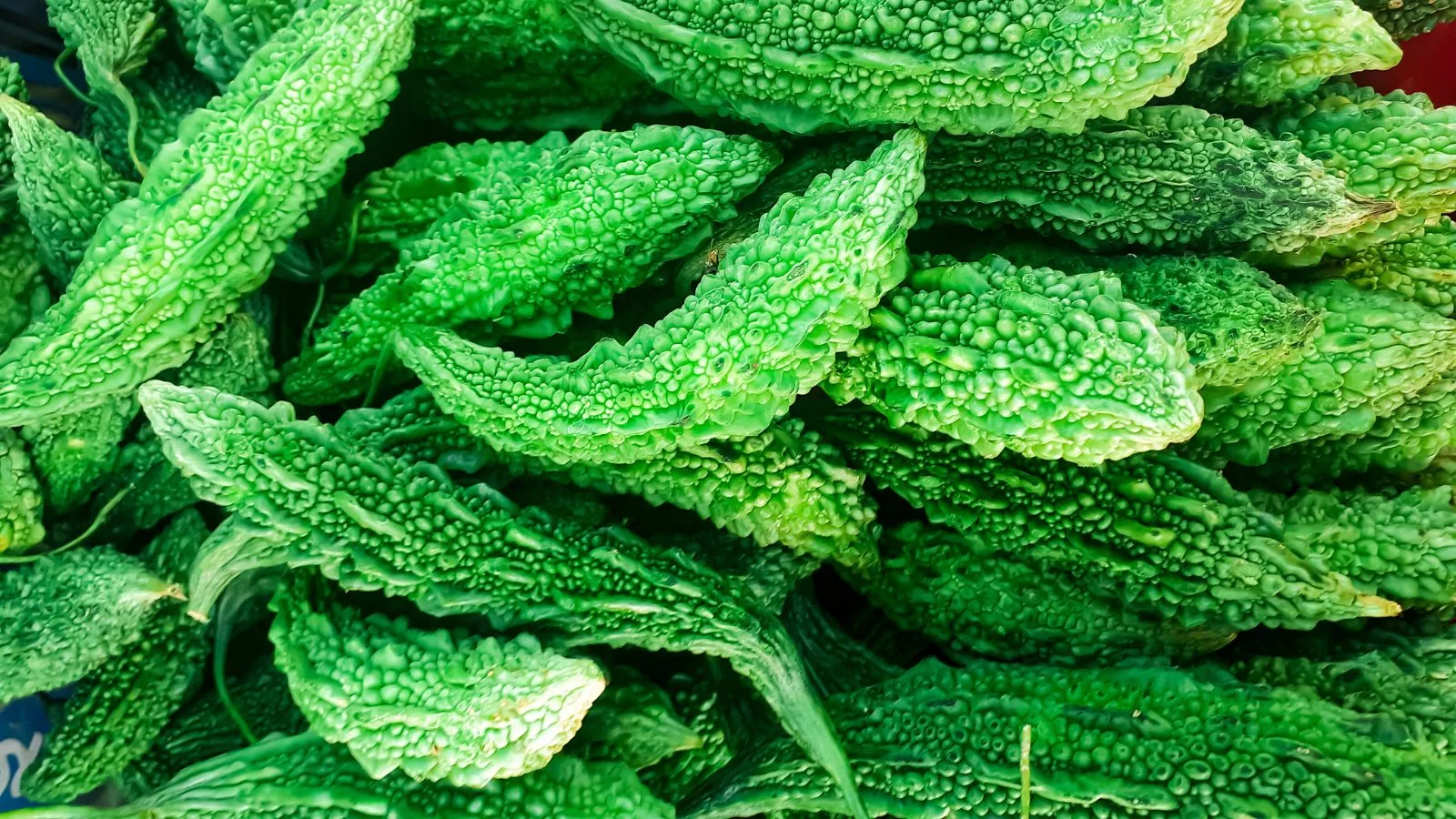
Karela (Momordica charantia) is a tropical and subtropical vine that bears warty, elongated green fruits. It is cultivated across Asia, Africa, and the Caribbean. The fruit, leaves, and seeds of bitter melon are commonly used in traditional medicine and culinary applications.
Ayurvedic Profile of Karela
In Ayurveda, Karela is known as Karavellaka. Its strong bitter nature makes it especially effective in balancing metabolic disorders and removing toxins from the body.
- Ayurvedic Name: Karavellaka
- Rasa (Taste): Tikta (Bitter)
- Guna (Quality): Laghu (Light), Ruksha (Dry)
- Virya (Potency): Ushna (Hot)
- Vipaka: Katu (Pungent)
- Dosha Effect: Pacifies Kapha and Pitta dosha
Nutritional Value of Karela
Karela is not only a medicinal herb but also a nutrient-dense vegetable that supports overall wellness.
It naturally contains:
- Vitamin C – supports immunity and skin health
- Vitamin A – beneficial for vision and skin repair
- Iron – helps maintain healthy blood levels
- Potassium – supports heart and muscle function
- Dietary Fiber – improves digestion and gut health
- Antioxidants – protect cells from oxidative stress
Scientific Classification
- Kingdom: Plantae
- Phylum: Angiosperms
- Class: Eudicots
- Order: Cucurbitales
- Family: Cucurbitaceae
- Genus: Momordica
- Order: Cucurbitales
- Species: Momordica charantia
Common Names
- English: Bitter Melon, Bitter Gourd
- Sanskrit: Karavellaka
- Hindi: Karela
- Tamil: Pavakkai
- Telugu: Kakarakaya
- Bengali: Korola
- Marathi: Karle
Health Benefits of Karela
🔹 Karela for Diabetes Management
- Helps reduce blood glucose levels
- Improves insulin sensitivity
- Contains charantin & polypeptide-P
🔹 Karela for Digestion & Gut Health
- Improves appetite
- Helps in constipation & acidity
🔹 Karela for Liver Detox
- Purifies blood
- Supports liver enzymes
🔹 Karela for Skin Problems
- Helps in acne, eczema, psoriasis
- Natural blood purifier
How to Use Karela
Karela can be consumed in different forms depending on individual preference and health needs:
- Karela Juice: Fresh juice consumed in the morning for detox and sugar balance
- Karela Powder: Dried and powdered form for daily supplementation
- Karela Capsules/Tablets: Standardised extracts for convenient use
- Fresh Vegetable: Cooked as part of a healthy diet
- Ayurvedic Formulations: Used in combination with other herbs
Traditional and Medicinal Uses
- Anti-Diabetic Properties - Contains charantin and polypeptide-p, which help in lowering blood sugar levels.
- Digestive Health - Acts as a natural laxative, aiding in digestion and preventing constipation.
- Liver Health - Supports liver detoxification and protects against fatty liver disease
- Immune System Booster - Rich in antioxidants and vitamin C, enhancing immunity and fighting infections.
Phytochemical Constituents
- Flavonoids: Quercetin, Kaempferol
- Alkaloids: Momordicine I & II
- Triterpenoids: Charantin, Cucurbitacin
- Steroidal Saponins: Momordicosides
- Proteins & Peptides: Polypeptide-P (plant insulin)
Why Choose Karela in Ayurveda?
Karela stands out in Ayurveda due to its deep detoxifying action, metabolic balancing effect, and long history of traditional use. Its ability to address the root cause of health issues rather than just symptoms makes it a valuable herbal ingredient for long-term wellness.
References
- Ayurvedic Pharmacopoeia of India (API), Govt. of India.
- Sharangdhar Samhita, Chapter on Herbal Remedies.
- Grover, J.K., Yadav, S.P. (2004). "Pharmacological actions and potential uses of Momordica charantia: A review." Journal of Ethnopharmacology, 93(1), 123-132.
- European Pharmacopoeia, 10th Edition, Council of Europe.
- Joseph, B., Jini, D. (2013). "A medicinal potency of Momordica charantia: A review." International Journal of Nutrition, Pharmacology, Neurological Diseases, 3(2), 78-83.
- Chopra, R.N., Nayar, S.L., & Chopra, I.C. (1956). Glossary of Indian Medicinal Plants. CSIR, New Delhi.
- Improvement in glucose tolerance due to Momordica charantia (PubMed).
- Nutritional value and properties of Karela (PharmEasy).
- Nutritional profile — IJSDR research article.
- Ayurvedic historical uses and traditional descriptions (Ask Ayurveda).
- Traditional Ayurvedic formulation insights for metabolic disorders.
- Effects of Karela on lipid metabolism and antioxidant activity (BMC Complementary Medicine and Therapies).



 My Account
