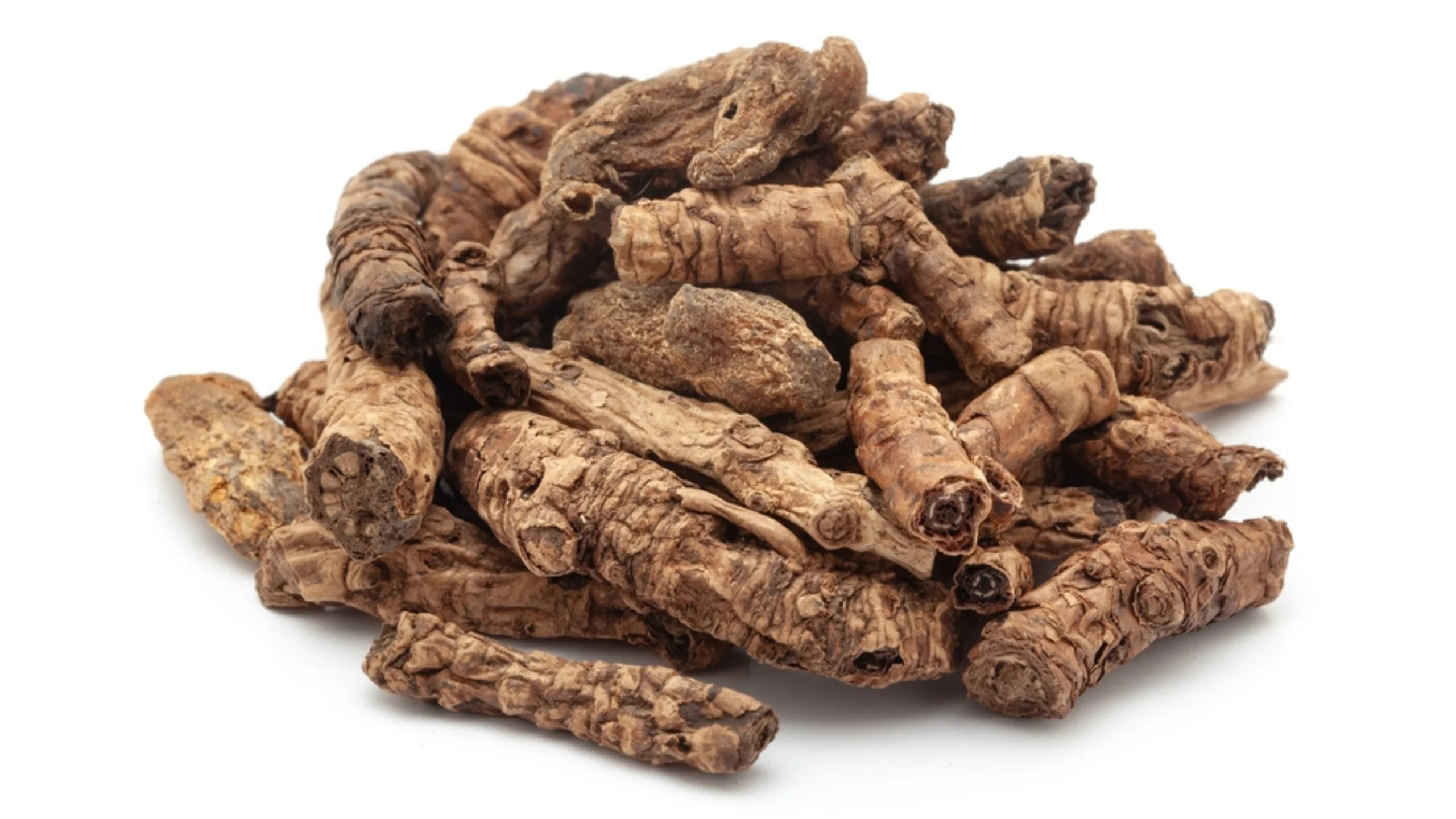
Katuki, commonly known as Kutki or Katuka, is a small perennial Himalayan herb belonging to the Plantaginaceae family. The currently accepted botanical name is Picrorhiza kurrooa Royle, while Picrorhiza kurroa Royle ex Benth. is a commonly used synonym. The plant is native to the Western Himalaya and is traditionally valued in Ayurveda for its intensely bitter rhizomes and roots.
In traditional herbal practice, Katuki has been associated mainly with digestive, liver-related, and general wellness preparations. Its rhizome contains characteristic iridoid glycosides, including picrosides and kutkin-related compounds, which have been studied for their biological properties.
Katuki is also a plant of conservation interest. Kew's current information lists Picrorhiza kurrooa as endangered according to the IUCN category, highlighting the importance of responsible sourcing and conservation of wild populations.
Picrorhiza kurroa Scientific Name
- Kingdom: Plantae
- Phylum: Angiosperms
- Class: Eudicots
- Order: Lamiales
- Family: Plantaginaceae
- Genus: Picrorhiza
- Species: Picrorhiza kurroa Royle ex Benth.
Picrorhiza kurroa Common Name
- English: Katuki, Picrorhiza
- Sanskrit: Katuki, Tikta
- Hindi: Katuka, Kutki
- Gujarati: Kutaki
- Bengali: Kutki
- Tamil: Kadugurohini
- Malayalam: Katavelyam
- Telugu: Katukaroha
Traditional Uses of Katuki (Picrorhiza kurroa)
Katuki has a long history of use in Ayurveda and other traditional herbal systems. Traditional use should be distinguished from modern clinical evidence.
Digestive and Bitter Herbal Preparations
Katuki's intensely bitter rhizome has traditionally been included in herbal preparations associated with digestion, appetite, and general digestive wellness. Traditional texts have also associated bitter herbs such as Katuki with bile-related and digestive functions.
Traditional Liver-Related Use
Katuki has traditionally been used in Ayurvedic preparations intended to support
liver and
digestive wellness. Some experimental and early clinical research has investigated Picrorhiza preparations and liver-related outcomes, but this evidence does not establish Katuki as a treatment for hepatitis, jaundice, cirrhosis, or other liver diseases.
Traditional Fever and Respiratory Use
Traditional sources describe the use of Katuki in preparations for fever and certain respiratory complaints. These historical uses should not be presented as proof that Katuki treats malaria, asthma, bronchitis, or chronic infections.
General Herbal Wellness
Katuki is also used as a bitter Ayurvedic herbal ingredient in traditional wellness formulations. Its use depends on the preparation, plant material, and formulation in which it is included.
Phytochemical Constituents of Katuki
Katuki contains several naturally occurring plant compounds, with iridoid glycosides being among its characteristic constituents. The chemical profile can vary depending on the plant material, growing conditions, and extraction method.
- Iridoid glycosides: Picroside I, Picroside II, and related compounds
- Kutkin-related compounds: Kutkin is associated with the characteristic bitter constituents of Katuki
- Phenolic compounds: Compounds such as apocynin and phenolic acids have been reported
- Flavonoids: Various flavonoid compounds have been identified in studies of the plant
- Other constituents: Additional plant metabolites may occur depending on the part and extract studied
These compounds have been investigated in laboratory and experimental research. Their presence does not by itself establish clinical effectiveness in humans.
Katuki Safety and Precautions
Katuki should be used according to the formulation, preparation, and recommended directions of a qualified healthcare professional or product manufacturer. Traditional use does not automatically establish safety or effectiveness for every person or health condition.
People who are pregnant or breastfeeding, children, individuals with existing medical conditions, or those taking regular medicines should seek appropriate professional advice before using concentrated Katuki preparations.
Because herbal products can vary in concentration and composition, avoid self-treating liver, digestive, or other medical conditions with Katuki alone. Persistent or serious symptoms should be evaluated by a qualified healthcare professional.
Frequently Asked Questions About Katuki
What is Katuki?
Katuki is a bitter Himalayan herb traditionally used in Ayurveda. Its accepted botanical name is
Picrorhiza kurrooa Royle.
Is Picrorhiza kurroa the current scientific name of Katuki?
Picrorhiza kurroa Royle ex Benth. is a commonly used synonym. Kew currently accepts
Picrorhiza kurrooa Royle.
What is Katuki traditionally used for?
Katuki has traditionally been used in digestive, liver-related, fever-related and general herbal wellness preparations.
Which part of Katuki is traditionally used?
The rhizome and root are the main plant parts associated with traditional herbal use.
Does Katuki treat liver disease?
Katuki has a history of traditional liver-related use and has also been investigated in experimental and limited clinical research. However, this does not establish Katuki as a treatment for hepatitis, jaundice, cirrhosis, or other liver diseases.
References
Ayurvedic Pharmacopoeia of India, Govt. of India, Part I, Vol. III, Ministry of AYUSH.
Khare, C.P. (2007). Indian Medicinal Plants: An Illustrated Dictionary. Springer.
Sharma, P.V. (1996). Dravyaguna Vigyan Vol. II. Chaukhamba Bharati Academy.
Sharma, V., & Pandey, D. (2010). "Pharmacological and therapeutic activity of Picrorhiza kurroa: A review." International Journal of Research in Pharmaceutical Sciences, 1(1), 1–8.
Dwivedi, S., & Agarwal, M.P. (1994). "Picrorhiza kurroa Royle ex Benth—A review." Indian Drugs, 31(6), 273–276.
The Wealth of India (1992). Raw Materials Series Vol. 7: Ka to Li, CSIR, New Delhi.
European Medicines Agency (EMA) (2015). Assessment Report on Picrorhiza kurroa Rhizome, Committee on Herbal Medicinal Products.



 My Account
