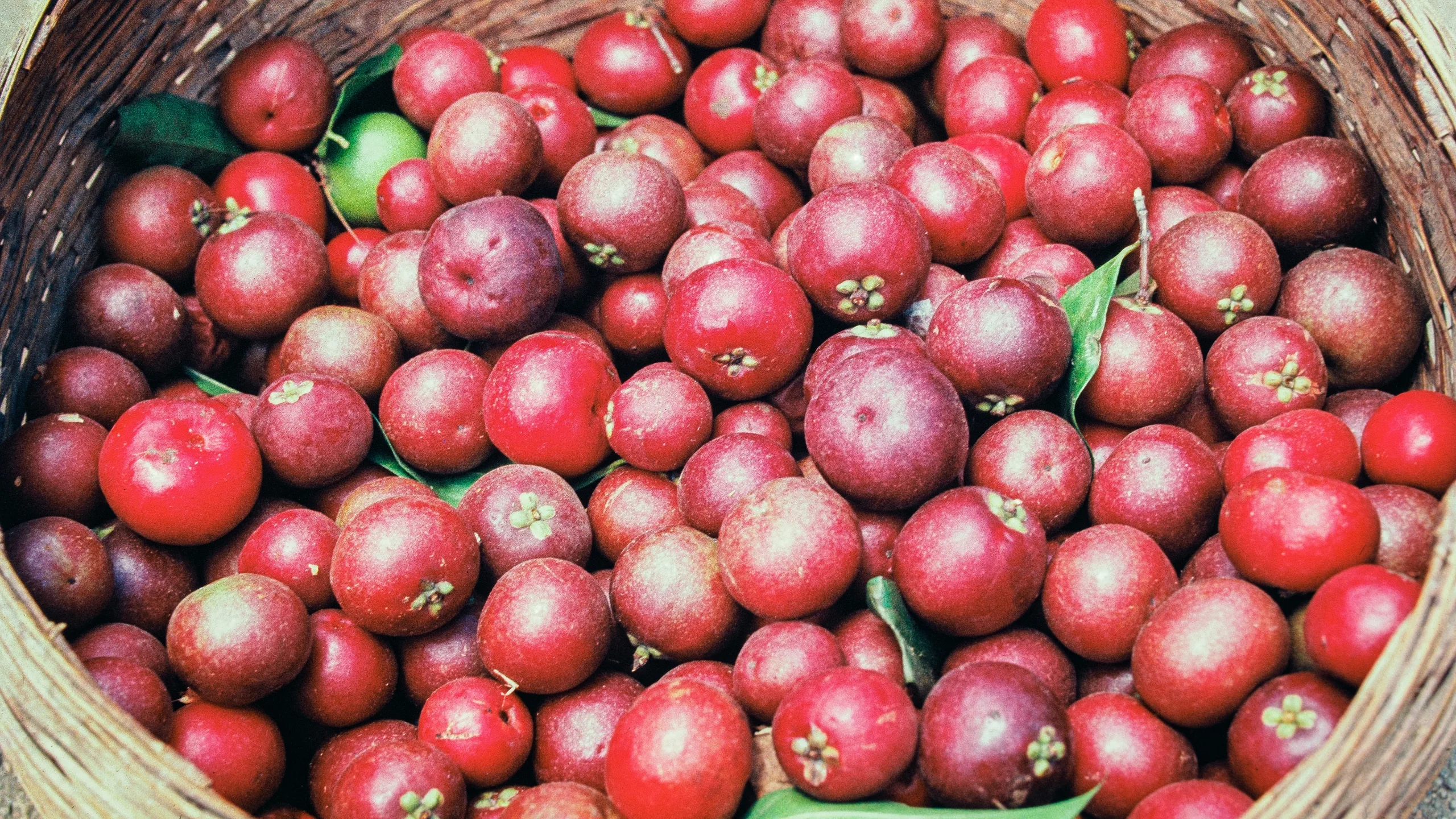
Kokum (Garcinia indica Choisy) is a small tropical evergreen tree native to India (primarily the Western Ghats). The dried ripe fruit rind is used as a souring agent and to prepare refreshing syrups; the seed yields kokum butter (a firm fat used in cosmetics and confectionery). Kokum has traditional culinary, cosmetic and medicinal uses and has been investigated for antioxidant, anti-inflammatory, anti-obesity and hepatoprotective activities.
Scientific Classification
- Kingdom: Plantae
- Phylum: Angiosperms
- Class: Eudicots (Magnoliopsida)
- Order: Malpighiales
- Family: Clusiaceae (Guttiferae)
- Genus: Garcinia
- Species: Garcinia indica Choisy
Common Names
- English: Kokum, Kokum butter tree, Wild mangosteen
- Sanskrit: Vṛkṣāmla (Vrikshamla)
- Hindi: Kokum, Ratamba (regional)
- Marathi / Konkani / Gujarati / Malayalam / Tamil / Telugu: Regional names include Ambaal/Amosole/Ratamba/Punarpuli/Murgal/Chinta (names vary by region)
Traditional and Medicinal Uses
- Digestive aid / acidulant: Rind used as a souring agent and digestive tonic.
- Cooling and hydration: Kokum sherbet/syrup consumed as a cooling summer beverage.
- Gastrointestinal complaints: Rind preparations used traditionally for diarrhoea, dysentery, gastric discomfort and as an antacid.
- Skin and wound care: Kokum butter (seed fat) applied topically to relieve dry skin, fissures and used in cosmetic formulations.
References
- Lim, S. H., Lee, H. S., Lee, C. H., & Choi, C.-I. (2021). Pharmacological activity of Garcinia indica (kokum): An updated review. Pharmaceuticals (Basel), 14(10), Article 1000.
- Padhye, S., Ahmad, A., Oswal, N., Sarkar, F. H., & others. (2009). Emerging role of garcinol, the antioxidant chalcone from Garcinia indica Choisy, and its synthetic analogs. Journal of Hematology & Oncology, 2:38.
- Baliga, M. S., Bhat, H. P., Pai, R. J., Boloor, R., & Palatty, P. L. (2011). The chemistry and medicinal uses of the underutilized Indian fruit tree Garcinia indica Choisy (kokum): A review. Food Research International, 44(7), 1790–1799. doi:10.1016/j.foodres.2011.01.064.
- Liu, C., Ho, P. C.-L., Wong, F. C.-H., Sethi, G., Wang, L. Z., & Goh, B. C. (2015). Garcinol: Current status of its anti-oxidative, anti-inflammatory and anti-cancer effects. Cancer Letters, 360(2), 216–226. doi:10.1016/j.canlet.2015.03.019.
- Jayaprakasha, G. K., & Sakariah, K. K. (2002). Determination of organic acids in leaves and rinds of Garcinia indica by liquid chromatography. Journal of Pharmaceutical and Biomedical Analysis, 28(2), 379–384.
- Kadam, M. P. V. (2012). Phytopharmacopoeial specifications of Garcinia indica fruit rinds. Phytopharmacopoeial Literature / Monograph.
- Ayurvedic Pharmacopoeia of India. (Relevant monograph entries for Vṛkṣāmla / Garcinia indica). Ministry of Ayush / Government of India.
- National Medicinal Plants Board (NMPB). Species monograph: Garcinia indica (kokum). Government of India.



 My Account
