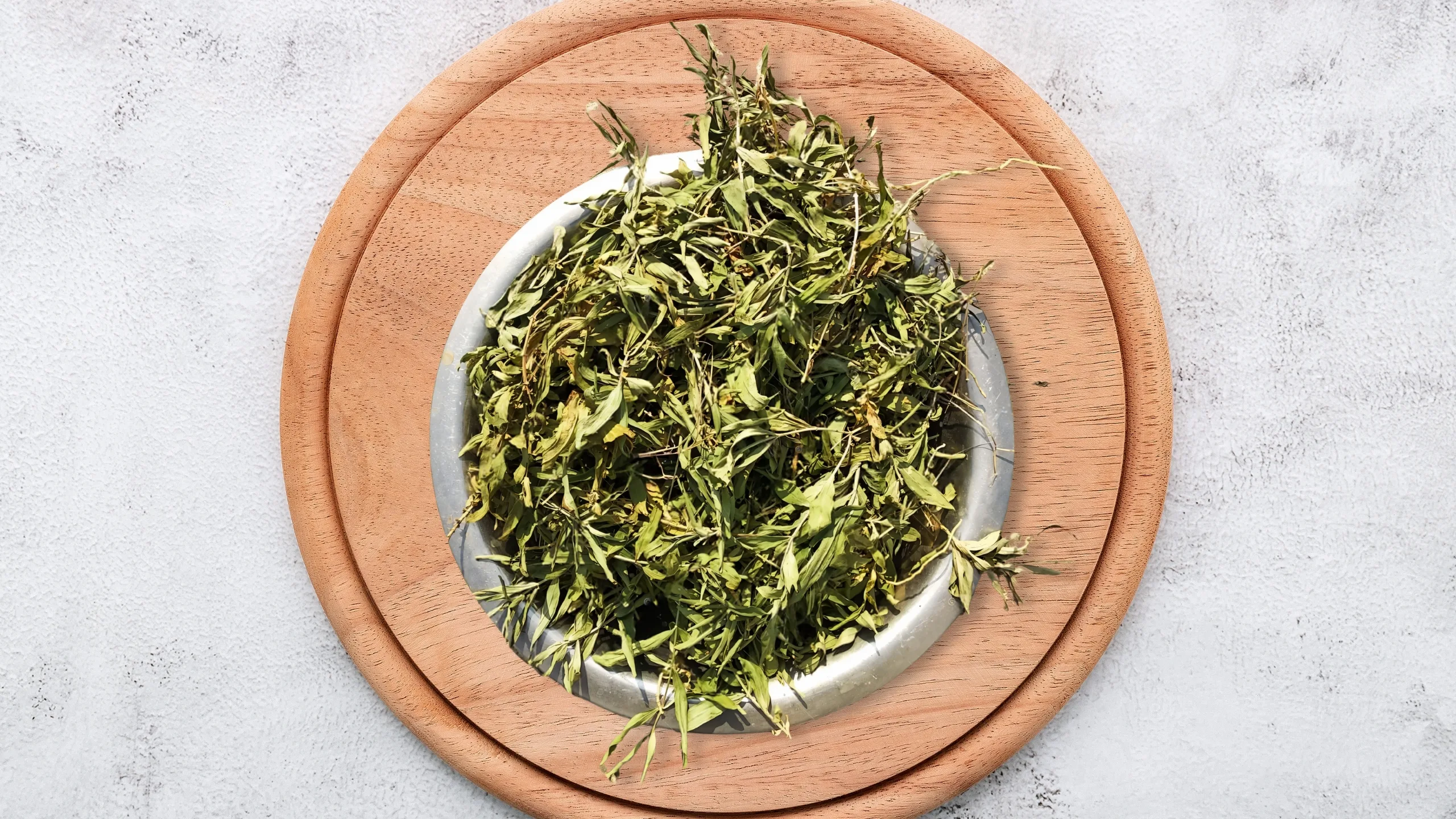
Mamejva, scientifically known as Enicostemma littorale Blume, is a small perennial herb belonging to the Gentianaceae family. Also known as Indian Whitehead and Chhota Chirayata, it is traditionally used in Ayurveda, Siddha, and folk medicine. The herb contains naturally occurring compounds such as swertiamarin, gentiopicroside, and other phytochemicals that have been studied for their biological activities.
Scientific Classification
- Kingdom: Plantae
- Clade: Angiosperms
- Clade: Eudicots
- Order: Gentianales
- Family: Gentianaceae
- Genus: Enicostemma
- Species: Enicostemma littorale Blume
Common Names
- English: Indian Whitehead, Indian Gentian
- Sanskrit: Mamajjaka
- Hindi: Mamejvo, Nayi
- Gujarati: Mamejavo
- Tamil: Vellarugu
- Telugu: Vellaku
- Kannada: Nelavarike
Traditional and Studied Uses
Traditional Digestive and Wellness Use:
Mamejva has a long history of use in traditional Indian medicine and is valued for its bitter taste and use in traditional herbal preparations.
Blood Sugar Research:
Extracts of Enicostemma littorale have been studied in laboratory and animal research for their effects on blood glucose. These findings do not establish the herb as a treatment for diabetes in humans.
Antioxidant and Anti-inflammatory Research:
Mamejva contains several phytochemicals that have been investigated for antioxidant and anti-inflammatory activities in experimental studies.
Traditional Fever and Liver-Related Use:
Mamejva has been used traditionally in some Indian medicinal systems for fever and liver-related conditions. Traditional use should not be interpreted as proof that the herb treats these diseases.
Phytochemical Constituents
Mamejva contains a range of naturally occurring phytochemicals, including:
- Swertiamarin—a secoiridoid glycoside commonly studied in Enicostemma littorale.
- Gentiopicroside—an iridoid glycoside associated with the bitter constituents of the plant.
- Flavonoids and phenolic compounds—naturally occurring compounds investigated for antioxidant activity.
- Other phytochemicals—including alkaloids, saponins, and triterpenoid compounds—were reported in different extracts of the plant.
Why Is Mamejva Bitter?
Mamejva is known for its distinctly bitter taste. This characteristic is associated with naturally occurring bitter compounds, including iridoid and secoiridoid glycosides such as gentiopicroside and swertiamarin.
Safety and Precautions
Mamejva should be used according to the formulation, product instructions, or guidance from a qualified healthcare professional. Evidence for many reported medicinal effects comes from traditional use or experimental research, and human clinical evidence may be limited. People who are pregnant, breastfeeding, taking regular medicines, or managing a medical condition should seek professional advice before using Mamejva preparations.
FAQs
What is Mamejva?
Mamejva is a traditional medicinal herb scientifically known as
Enicostemma littorale.
What is the botanical name of Mamejva?
The botanical name is
Enicostemma littorale Blume.
What are the main compounds in Mamejva?
Mamejva contains compounds such as swertiamarin, gentiopicroside, flavonoids, and phenolic compounds.
Why is Mamejva bitter?
Its bitter taste is associated with naturally occurring iridoid and secoiridoid glycosides.
How is Mamejva traditionally used?
Mamejva has traditionally been used in Indian medicinal systems as a bitter herbal ingredient in various preparations.
References
Ayurvedic Pharmacopoeia of India (API), Part I, Volume IV, Govt. of India, Ministry of AYUSH.
Patel, M.B., & Mishra, S.H. (2011). Hypoglycemic activity of alkaloidal fraction of Enicostemma littorale Blume leaves in normal and diabetic rats. Indian Journal of Pharmacology, 43(3), 290–294.
Kar, A., & Choudhary, B.K. (2003). Prevention of thyroxine-induced hyperglycemia by Enicostemma littorale Blume extract in rats. Indian Journal of Experimental Biology, 41, 885–888.
Jain, A., & Soni, M. (2012). Evaluation of anti-inflammatory activity of Enicostemma littorale Blume. Journal of Pharmacy Research, 5(1), 531–533.
Chopra, R.N., Nayar, S.L., & Chopra, I.C. (1956). Glossary of Indian Medicinal Plants. Council of Scientific and Industrial Research (CSIR), New Delhi.
Kirtikar, K.R., & Basu, B.D. (1935). Indian Medicinal Plants, Vol. 2. International Book Distributors.
European Pharmacopoeia, 10th Edition, Council of Europe (for comparative phytochemical references).
Singh, D., & Singh, R. (2010). Pharmacognostical and phytochemical evaluation of Enicostemma littorale Blume. International Journal of Pharmaceutical Sciences Review and Research, 5(3), 68–72.
Content by: Polycare Herbals Editorial Team
Specialization: Ayurvedic and Herbal Wellness Information



 My Account
