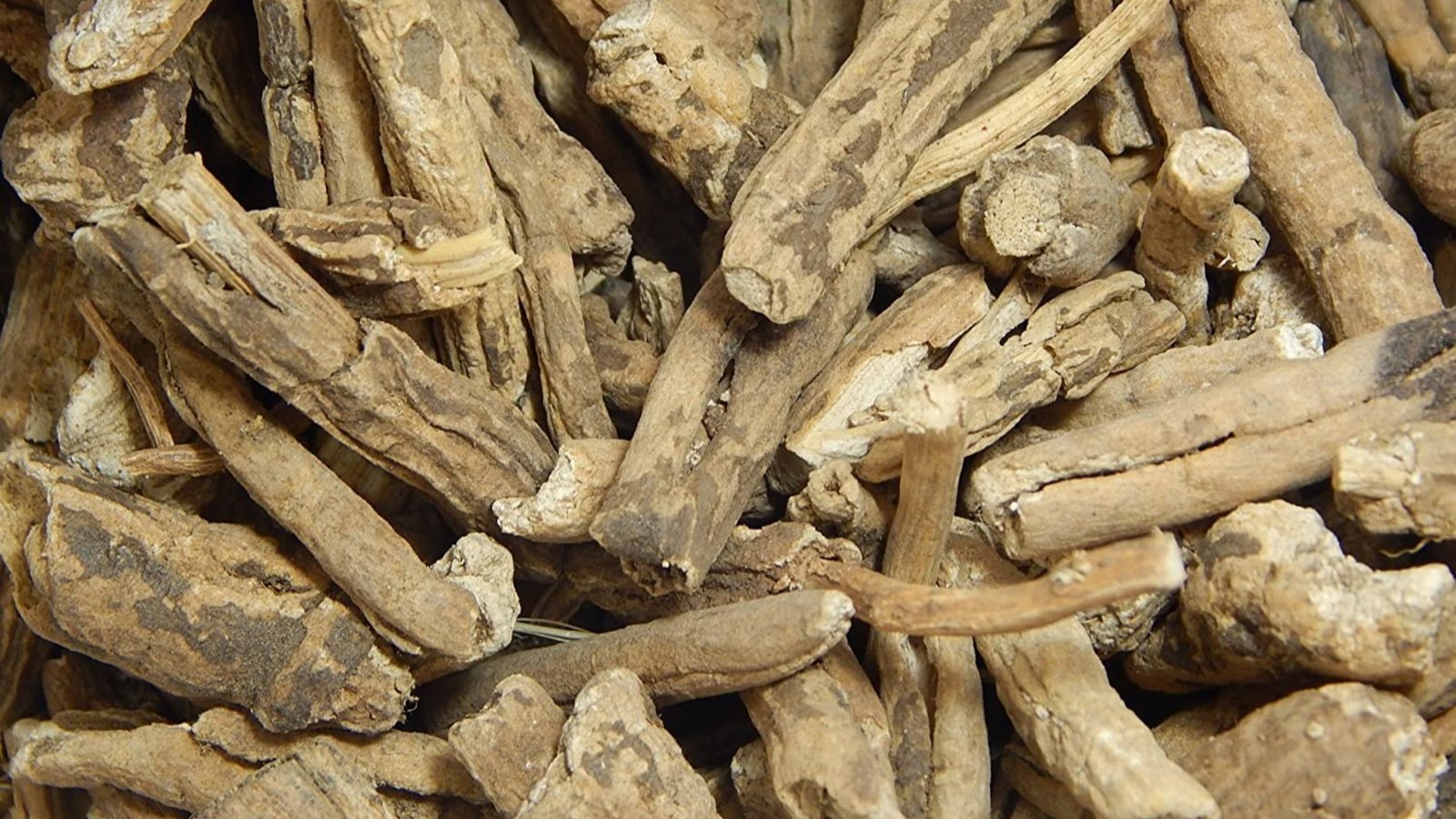
Nishoth, scientifically known as Operculina turpethum (L.) Silva Manso, is a perennial twining herb belonging to the Convolvulaceae family. It is also known as Turpeth Root and Indian Jalap. The root of the plant has a long history of use in Ayurveda, particularly in traditional herbal preparations valued for its purgative and laxative properties. Nishoth contains naturally occurring resinous and other phytochemical constituents associated with its traditional use.
Scientific Classification
- Kingdom: Plantae
- Clade: Angiosperms
- Clade: Eudicots
- Order: Solanales
- Family: Convolvulaceae
- Genus: Operculina
- Species: Operculina turpethum (L.) Silva Manso
Common Names
- English: Turpeth Root / Indian Jalap
- Sanskrit: Trivrit, Teekshna Trivrit
- Hindi: Nishoth, Tarbel
- Gujarati: Nisot
- Tamil: Sivathai
- Telugu: Tegada
- Bengali: Nishoth
- Marathi: Nishottar
Traditional Uses of Nishoth
Nishoth root has a long history of use in Ayurveda as a purgative herb. It is traditionally included in herbal preparations intended to support bowel cleansing and regularity.
Traditional Digestive Use:
In traditional Ayurvedic practice, Nishoth has been used in formulations associated with digestive and abdominal health. Traditional use does not establish effectiveness for specific gastrointestinal diseases.
Traditional Liver-Related Use:
Nishoth appears in traditional Ayurvedic formulations for certain liver-related and digestive conditions. These traditional references should be distinguished from modern clinical evidence.
Traditional Skin and Wellness Use:
Nishoth has also been included in some traditional herbal preparations for skin and general wellness purposes. Claims about treating specific skin diseases should not be inferred from traditional use alone.
Phytochemical Constituents
The root of Operculina turpethum contains naturally occurring phytochemicals, including:
- Resin glycosides—important constituents associated with the traditional purgative character of the root.
- Turpethin—a resinous constituent reported in Nishoth root.
- Glycosidic compounds—reported in different extracts of the plant.
- Flavonoids and phenolic compounds—naturally occurring plant compounds reported in phytochemical studies.
- Other constituents—the chemical profile can vary depending on the plant part, geographical source, and extraction method.
How Is Nishoth Traditionally Used?
Nishoth is traditionally used mainly through its root in Ayurvedic herbal preparations. Because the root has a strong purgative action, dosage and preparation are important. Concentrated preparations should be used according to the product instructions or under the guidance of a qualified healthcare professional.
Safety and Precautions
Nishoth is a potent traditional purgative herb and should not be used casually or in excessive amounts. Improper use may cause abdominal cramping, loose stools, dehydration, or electrolyte imbalance. It should be used according to the formulation, product instructions, or guidance from a qualified healthcare professional. People with ongoing gastrointestinal problems, pregnant or breastfeeding individuals, children, or those taking regular medicines should seek professional advice before use.
Frequently Asked Questions
What is Nishoth?
Nishoth is an Ayurvedic herb botanically known as
Operculina turpethum.
What is the botanical name of Nishoth?
Its botanical name is
Operculina turpethum (L.) Silva Manso.
Which part of Nishoth is traditionally used?
The root is the main plant part traditionally used in Ayurvedic preparations.
What is Nishoth traditionally known for?
Nishoth is traditionally valued for its purgative and laxative properties.
What are the main constituents of Nishoth?
The root contains resin glycosides, turpethin, and other naturally occurring phytochemicals.
References
The Ayurvedic Pharmacopoeia of India, Part I, Vol. 1, Govt. of India, Ministry of AYUSH, New Delhi.
Nadkarni, K.M. (1976). Indian Materia Medica, Vol 1, Popular Prakashan, Mumbai.
Anonymous (2001). Quality Standards of Indian Medicinal Plants, Vol. 2, ICMR, New Delhi.
Sharma, P.C., Yelne, M.B., & Dennis, T.J. (2001). Database on Medicinal Plants Used in Ayurveda, Vol. 4, CCRAS, New Delhi.
Gupta, R.K., & Tandon, N. (2004). Reviews on Indian Medicinal Plants, Vol. 3, ICMR, New Delhi.
Singh, S., & Kumar, S. (2012). “Pharmacognostical and Phytochemical Evaluation of Operculina turpethum.” International Journal of Pharmaceutical Sciences Review and Research, 14(1), 104-108.
Goyal, M., Nagori, B.P., & Sasmal, D. (2011). “Phytopharmacological review on Operculina turpethum.” Asian Journal of Plant Sciences, 10(6), 390-395.
European Pharmacopoeia, 10th Edition, Council of Europe.
Content by: Polycare Herbals Editorial Team
Specialization: Ayurvedic and Herbal Wellness Information



 My Account
