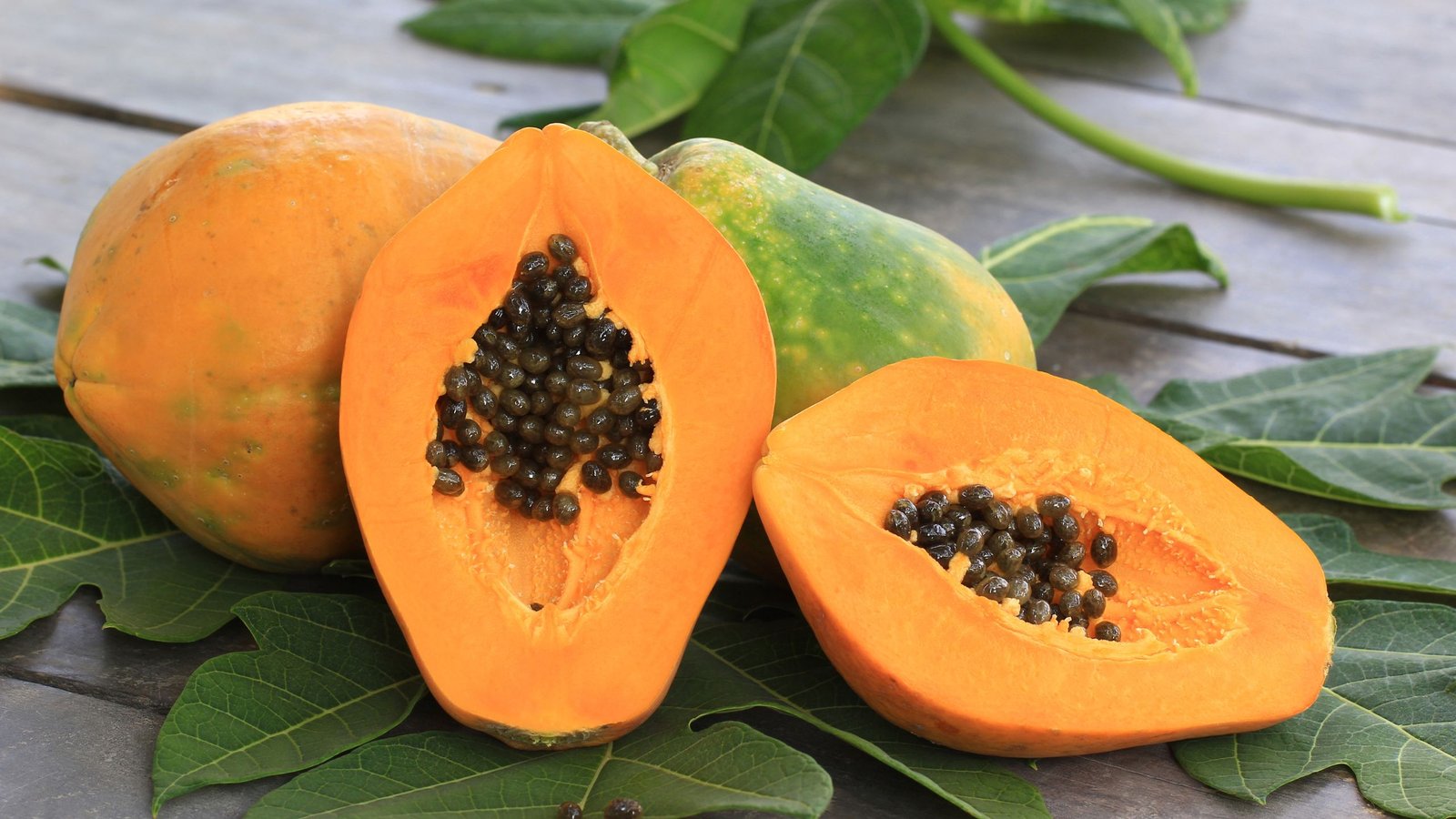
"Papaya (Carica papaya) is a fast-growing, tropical fruit-bearing plant known for its sweet, orange-fleshed fruit and medicinal properties. Native to Central America and Mexico, it belongs to the Caricaceae family. Both its fruit and various plant parts (leaves, seeds, latex) are used in traditional medicine systems such as Ayurveda, Unani, and folk medicine for treating digestive issues, infections, inflammation, and skin problems.
"
Papaya Scientific Name
- Kingdom: Plantae
- Phylum: Angiosperms
- Class: Eudicots
- Order: Brassicales
- Family: Caricaceae
- Genus: Carica
- Species: Carica papaya
Papaya Common Name
- English: Papaya
- Sanskrit: Eranda Karkati, Madhu Karkati
- Hindi: Papita
- Tamil: Pappali
- Telugu: Boppayi Pandu
- Bengali: Pepe
- Marathi: Papayi
🍽️ Papaya Uses in Daily Diet & Healthy Eating
Papaya is a popular fruit in daily food habits because it is light on the stomach and easy to digest.
- Papaya can be eaten daily as a morning fruit for better digestion
- It is commonly included in fruit bowls and breakfast plates
- Papaya is used as a healthy snack between meals
- It is suitable for children and elderly people because it is soft and easy to chew
- Papaya is often included in weight management and low-calorie diet plans
- Many people include Papaya in summer diet for hydration and freshness
- Papaya is used in fitness diets to support digestion after protein-rich meals
🏡 Papaya Uses at Home
Papaya is easily available in Indian homes and used in many simple ways:
- Fresh Papaya is kept at home as a ready-to-eat fruit
- Papaya pulp is used in home-made face packs for natural glow
- Mashed Papaya is used as a natural scrub for gentle exfoliation
- Papaya + honey or Papaya + milk paste is used in traditional home skin care
- Papaya pulp is sometimes used as a natural softening agent in home remedies
- Papaya waste is used in home composting in kitchen gardens
🍳 Papaya Uses in Kitchen & Cooking
Papaya is widely used in Indian kitchens for cooking and food preparation:
- Raw Papaya (Kachcha Papita) is used in sabzi, curry, and stir-fry recipes
- Raw Papaya is added to salads and kachumber
- Papaya is used in South Indian and North-East Indian dishes
- Papaya is used to prepare chutney, pickle, and dry sabzi
- Raw Papaya is traditionally used as a natural meat tenderizer at home
- Papaya leaves are sometimes used in traditional cooking methods for flavour
- Papaya seeds are occasionally dried and used as natural seasoning
🥤 Papaya Uses in Home-Made Drinks & Juices
Papaya is commonly used in refreshing home-made drinks:
- Papaya juice is prepared as a natural summer drink
- Papaya smoothies are made with milk or plant-based milk
- Papaya is blended with other fruits in healthy fruit shakes
- Papaya is added to detox drinks (traditional home practice)
- Papaya pulp is used in home-made desserts and fruit creams
🥗 Papaya Uses in Everyday Food Recipes
Papaya is part of many daily food recipes in Indian homes:
- Papaya fruit salad
- Raw Papaya sabzi
- Papaya raita (regional use)
- halwa and desserts
- jam and fruit spreads
- curry with spices
- mixed vegetable dishes
🌿 Papaya Uses in Traditional Home Care & Wellness
In daily home care routines, Papaya is traditionally used for:
- Supporting smooth digestion after heavy meals
- Natural face glow routines at home
- Refreshing fruit for summer wellness routines
- Traditional use in home-based skin care
- Simple fruit-based detox lifestyle practices
Papaya Traditional and Medicinal Uses
- Digestive Health - Papain enzyme from unripe fruit and latex aids in digestion by breaking down proteins.
- Anthelmintic Use - Seeds are used as a natural remedy against intestinal worms, especially roundworms and tapeworms.
- Skin and Wound Healing - Latex and pulp applied topically for wound healing, skin infections, and burns due to antimicrobial and proteolytic action.
- Anti-inflammatory and Analgesic Use - Leaf extract traditionally used to reduce inflammation and pain in arthritic and febrile conditions.
- Reproductive and Menstrual Health - Used in some traditional systems for menstrual regulation and to induce abortion
References
- Ayurvedic Pharmacopoeia of India (API), Part-I, Vol. I, Govt. of India.
- Chopra, R.N., Nayar, S.L., & Chopra, I.C. (1956). Glossary of Indian Medicinal Plants. CSIR, New Delhi.
- Otsuki, N., Dang, N.H., Kumagai, E., et al. (2010). "Aqueous extract of Carica papaya leaves exhibits anti-tumor activity and immunomodulatory effects." Journal of Ethnopharmacology, 127(3), 760–767.
- Ahmad, N., Fazal, H., Ayaz, M., et al. (2011). "Biological role of Carica papaya in medicine and cosmetics." Pakistan Journal of Botany, 43(1), 1–9.
- European Pharmacopoeia, 10th Edition, Council of Europe.
- Marisa, A.S., & Keong, C.Y. (2016). "Effect of Carica papaya leaf extract on platelet count in dengue patients: A systematic review and meta-analysis." Evidence-Based Complementary and Alternative Medicine, 2016, Article ID 7596840.
- Wee, Y.C. (2010). Fruits of Southeast Asia: Facts and Folklore. Marshall Cavendish International.
- World Health Organization (WHO) Monographs on Selected Medicinal Plants.



 My Account
