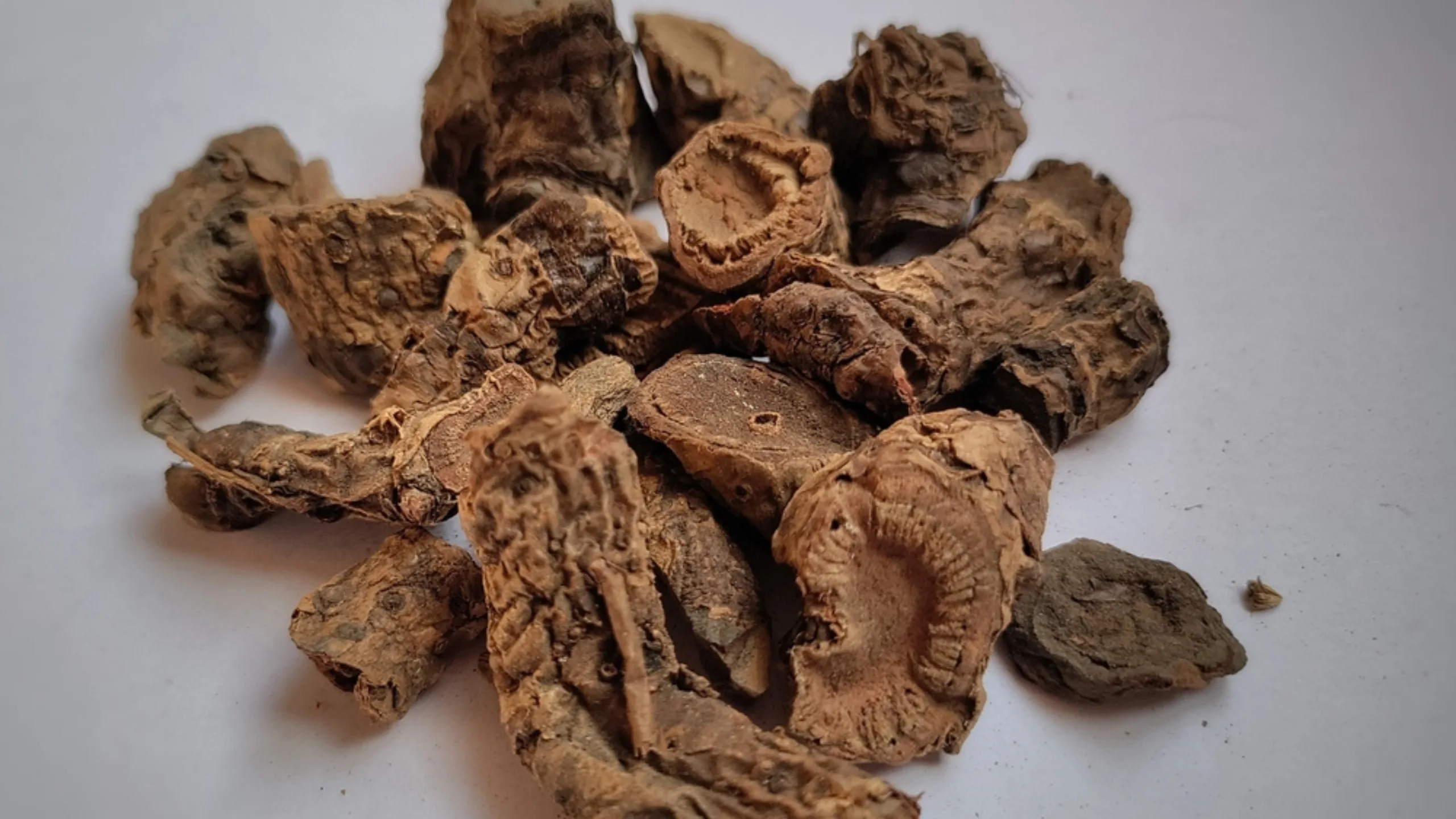
Pashanbhed is a traditional Ayurvedic name associated with herbs used in formulations related to urinary health. Bergenia ligulata Engl. is a botanical name historically used for a Himalayan plant in the Saxifragaceae family. The plant’s underground parts have been studied for naturally occurring compounds, including bergenin, and for potential activity related to urinary stone formation.
In traditional Ayurvedic practice, Pashanbhed is associated with urinary stone-related preparations. However, laboratory and animal studies do not establish that the herb can reliably dissolve or remove kidney stones in humans. Correct botanical identification is important because the name 'Pashanbhed' may refer to different plants across traditional references.
Pashanbhed Scientific Names
- Kingdom: Plantae
- Clade: Angiosperms
- Clade: Eudicots
- Order: Saxifragales
- Family: Saxifragaceae
- Genus: Bergenia
- Species: Bergenia ligulata
Bergenia ligulata Common Names
- English: Rockfoil, Stonebreaker
- Sanskrit: Pashanbheda, Ashmabhid
- Hindi: Pashanbhed
- Marathi: Pashanbhed
- Tamil: Sirupulai
- Kannada: Ashmabhedi
- Bengali: Patharkuchi
Traditional Uses of Pashanbhed
Pashanbhed is described in traditional Ayurvedic sources in connection with urinary health. Its traditional uses should be distinguished from benefits established through human clinical research.
- Traditional Urinary Use: Pashanbhed is traditionally associated with preparations for urinary stone-related complaints. Research has investigated extracts for effects on calcium oxalate crystals and stone formation, but clinical effectiveness in humans is not firmly established.
- Antioxidant Research: Studies have investigated compounds such as bergenin and other plant constituents for antioxidant activity. This does not establish a treatment for any specific disease.
- Inflammation-Related Research: Experimental studies have explored possible anti-inflammatory effects. Evidence is insufficient to claim that Pashanbhed treats arthritis or joint disease.
- Traditional External Use: Some traditional references describe external applications. These should not be presented as proven wound-healing treatments.
- Liver-Related Claims: Do not claim that Pashanbhed protects the liver or treats jaundice unless reliable evidence directly supports the specific preparation and use.
Herbal preparations may differ in species, plant part, extraction method and concentration. Anyone with suspected kidney stones, severe pain, fever, vomiting or blood in the urine should seek medical assessment rather than relying on an herbal remedy.
Phytochemical Constituents of Pashanbhed
Research on Bergenia ligulata has reported several naturally occurring plant compounds. These include:
- Bergenin: A prominent compound studied in extracts of the plant.
- Phenolic compounds: Gallic acid and other phenolic constituents have been reported.
- Flavonoids and related compounds: Catechin and other flavonoid-related constituents have been investigated.
- Tannins: Tannins and related polyphenols have been reported in phytochemical studies.
- Other constituents: Arbutin, sterols and additional compounds have been reported in some studies.
The exact composition depends on botanical identity, plant part, geographical origin and extraction method. Research findings about isolated compounds or extracts should not be interpreted as proof that the whole herb treats kidney stones or other diseases in humans.
Frequently Asked Questions
1. What is Pashanbhed?
Pashanbhed is a traditional Ayurvedic name associated with herbs used in urinary-health formulations.
2. What is the scientific name of Pashanbhed?
Bergenia ligulata is a name used in medicinal literature. Kew currently accepts
Bergenia pacumbis as the botanical name for this taxon.
3. What is Pashanbhed traditionally used for?
It is traditionally associated with urinary stone-related preparations, but human clinical evidence remains limited.
4. Can Pashanbhed dissolve kidney stones?
Laboratory and animal studies have investigated its potential, but reliable clinical evidence is insufficient to confirm that it dissolves or removes stones in humans.
5. Is Pashanbhed safe for everyone?
Not necessarily. Safety depends on the plant identity, preparation and individual health factors. Consult a qualified healthcare professional before use.
References
Ayurvedic Pharmacopoeia of India, Part I, Vol. III, Govt. of India, Ministry of AYUSH.
Indian Medicinal Plants – A Compendium of 500 Species by P.K. Warrier, V.P.K. Nambiar, C. Ramankutty, Orient Longman.
Chopra, R.N., Nayar, S.L., & Chopra, I.C. (1956). Glossary of Indian Medicinal Plants. CSIR, New Delhi.
Sharma, P.C., Yelne, M.B., & Dennis, T.J. (2005). Database on Medicinal Plants Used in Ayurveda, Vol. 6, CCRAS, New Delhi.
Singh, R., Jain, V., & Gupta, V. (2010). "Bergenia ligulata: A review of its traditional uses, phytochemistry, and pharmacology." Pharmacognosy Reviews, 4(7), 55–61.
European Medicines Agency (EMA). Herbal monograph on Bergenia ligulata rhizome. Committee on Herbal Medicinal Products (HMPC).
Dash, B., & Kashyap, L. (1980). Materia Medica of Ayurveda. B. Jain Publishers.



 My Account

