Free Shipping On Above Order Value Rs. 500
Free Shipping On Above Order Value Rs. 500


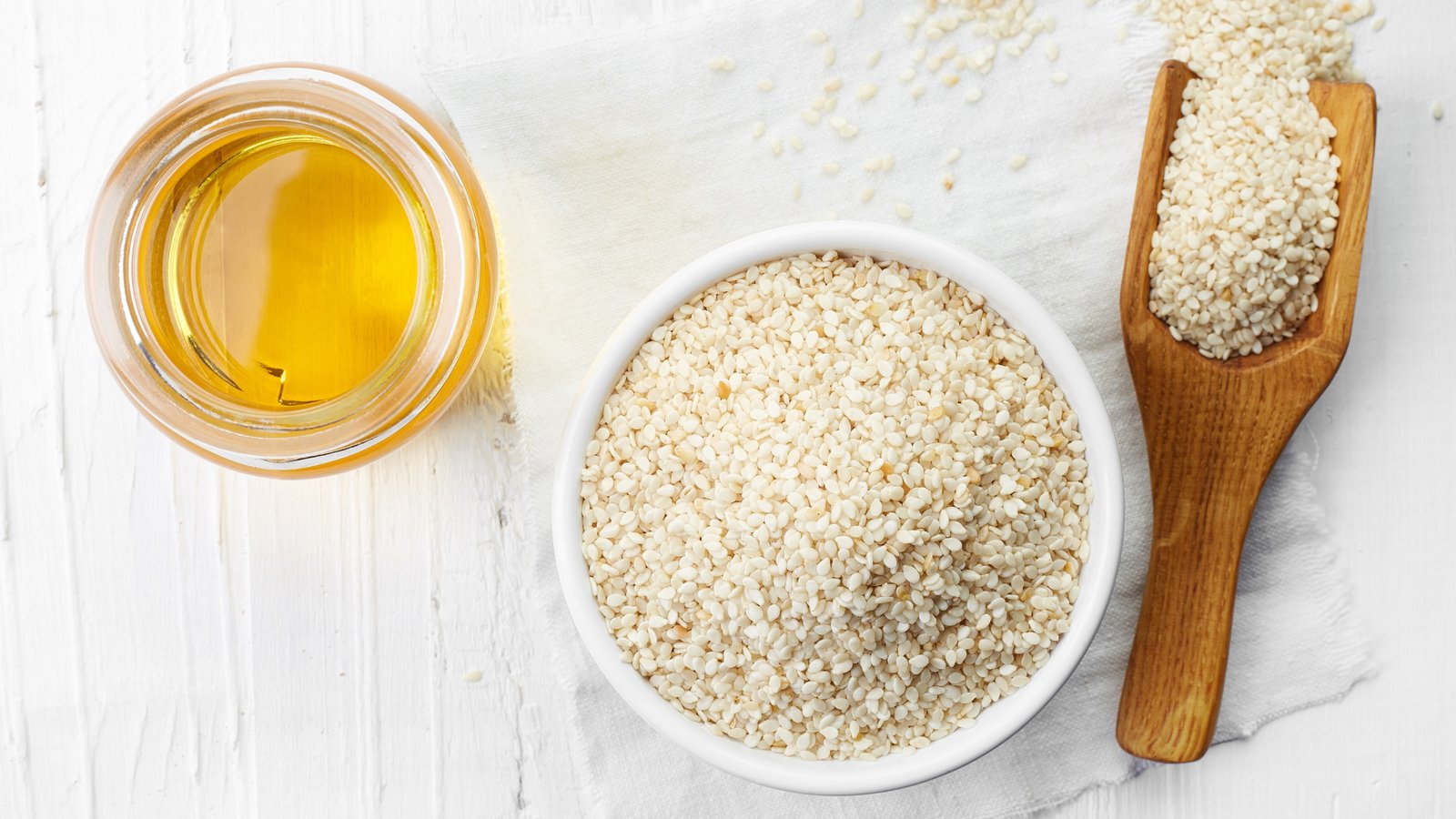
Sesame, scientifically known as Sesamum indicum, is an ancient oilseed plant belonging to the Pedaliaceae family. It is cultivated for its nutrient-rich seeds and sesame oil and has an important place in traditional food systems and Ayurveda.
In Ayurveda, sesame, known as Tila, and sesame oil, known as Tila Taila, have traditionally been valued for their nourishing and strengthening qualities.
Different parts and preparations of sesame may have different traditional uses. Sesame seeds are commonly used as food, while sesame oil has a long history of use in traditional Ayurvedic practices, including external oil application.Sesame has an important place in classical Ayurvedic practice.
Known as Tila in Sanskrit, sesame is traditionally associated with nourishing, strengthening and warming qualities. Sesame oil is particularly well known in Ayurveda for traditional external oil applications such as Abhyanga.
The traditional Ayurvedic use of sesame may vary according to the preparation, plant part, method of use and individual constitution.
Sesame should therefore be understood as a traditional Ayurvedic ingredient rather than as a single-purpose remedy.Different parts of the sesame plant have different traditional, nutritional and practical applications.
Sesame seeds are widely used as a food ingredient and are valued for their nutritional composition, including fats, protein, minerals and naturally occurring plant compounds.
Sesame oil is extracted from sesame seeds and has a long history of use in food systems and Ayurveda.
In traditional Ayurvedic practice, sesame oil is commonly associated with external oil application and massage.
Other parts of the sesame plant have traditional and regional uses, although seeds and oil are the most widely recognised parts.
The composition and traditional application of sesame can vary depending on the plant part, variety, processing method and preparation.
Sesame and sesame oil have been used traditionally in Ayurveda and food systems for a variety of purposes.
Sesame seeds are traditionally included in diets and preparations associated with nourishment and digestive wellness.
Sesame contains dietary fat, protein and other nutrients that contribute to its nutritional value.
Sesame has traditionally been valued as a nourishing food ingredient. Its seeds contain minerals and other nutrients that contribute to a balanced diet.
Sesame oil is also traditionally used externally in Ayurvedic massage and oil application practices.
Sesame oil has a long history of traditional external use for skin nourishment and oil massage.
It is also used as a base oil in several traditional hair and body oil preparations.
Sesame is traditionally considered a nourishing ingredient in Ayurveda and is associated with strengthening and rejuvenative practices.
Its traditional use should be understood within the broader Ayurvedic dietary and lifestyle context.
Sesame oil is particularly well known in Ayurveda for traditional practices such as Abhyanga, or oil massage.
The choice of oil, method of application and duration may vary according to the individual and traditional practice.
Sesame oil, traditionally known as Tila Taila, is one of the most recognised oils in Ayurveda.
Traditionally, it has been used for:
Sesame oil should not automatically be considered interchangeable with every other type of oil. Its composition, traditional properties and applications are distinct.
Sesame seeds contain several naturally occurring nutritional and phytochemical components.
These include:
Important sesame lignans studied in scientific literature include sesamin and sesamolin.
The nutritional and phytochemical composition may vary depending on sesame variety, growing conditions, processing and preparation.
Modern research has investigated sesame seeds, sesame oil and their naturally occurring compounds from nutritional and biological perspectives.
Scientific literature has explored areas including:
Research findings can vary according to the type of sesame preparation, dosage, study design and population.
Laboratory, animal and nutritional studies should not automatically be interpreted as proof of a clinical effect in humans.
More human research may be required to establish the clinical significance of individual sesame compounds and preparations.
Sesame contains several naturally occurring compounds that have been studied in nutritional and phytochemical research.
Some notable compounds include:
Sesamin is a naturally occurring lignan found in sesame seeds and sesame oil and has been investigated for various biological properties.
Sesamolin is another important sesame lignan studied for its antioxidant and other biological properties.
Sesamol is a phenolic compound associated with sesame and has been investigated in laboratory research.
Sesame also contains tocopherols and other naturally occurring compounds that contribute to its nutritional and antioxidant profile.
The presence and concentration of these compounds may vary according to seed variety, processing and oil extraction methods.
Sesame seeds and sesame oil come from the same plant, Sesamum indicum, but they are different preparations.
Sesame seeds contain:
Sesame oil primarily contains:
Because their composition is different, information about sesame seeds should not automatically be applied to sesame oil, and vice versa.
Yes. Tila is a traditional Sanskrit name associated with sesame.
The botanical species commonly referred to as sesame is Sesamum indicum.
Tila Taila is the traditional Ayurvedic term commonly associated with sesame oil.
Sesame oil has been used traditionally in Ayurveda for external oil application, massage and as a base oil in various preparations.
Sesame (Sesamum indicum) is an important botanical ingredient documented in the Polycare Herbals ingredient knowledge base.
Polycare Herbals provides ingredient information covering botanical identity, traditional Ayurvedic context, plant parts, traditional applications and available scientific research.
The scientific name of sesame is Sesamum indicum. It belongs to the Pedaliaceae family.
Sesame is traditionally known as Tila in Ayurveda and Sanskrit.
Sesame oil is traditionally known as Tila Taila.
Sesame is traditionally described as a nourishing and strengthening ingredient. Its exact Ayurvedic properties should be interpreted according to the classical source, plant part and preparation.
Sesame seeds and sesame oil are the most widely recognised parts used in food and traditional practices.
Sesame oil has a long history of traditional external use, including Abhyanga or Ayurvedic oil massage.
Sesame contains naturally occurring compounds including sesamin, sesamolin, sesamol, phenolic compounds and tocopherols, along with fats, protein, fibre and minerals.
Modern research has investigated sesame's nutritional composition, lignans, antioxidant properties, fatty-acid profile and other biological characteristics.
Yes. Tila is a traditional Sanskrit name associated with sesame, scientifically identified as Sesamum indicum.
No. Sesame oil is extracted from sesame seeds, but the nutritional and chemical composition of the whole seed differs from that of the extracted oil.
The information on this page is provided for educational purposes and describes traditional Ayurvedic knowledge, nutritional information and available scientific literature related to Sesamum indicum.
Traditional uses should not be interpreted as claims to diagnose, treat, cure or prevent any disease.
The nutritional composition and traditional properties of sesame may vary depending on the plant variety, plant part, processing method and preparation.
For individual health concerns or the use of herbal preparations, consult a qualified healthcare or Ayurvedic professional.Content category: Ayurvedic Ingredient Information
Botanical ingredient: Sesamum indicum
Last reviewed: October 2026
Reviewed by: Polycare Herbals Editorial Team
This page should be reviewed when relevant Ayurvedic references, scientific literature or Polycare formulation information is substantially updated.

Moving your card details to a much more secured place

100% Payment Protection. Easy Return Policy

Fast, reliable delivery from global warehouses

 My Account
