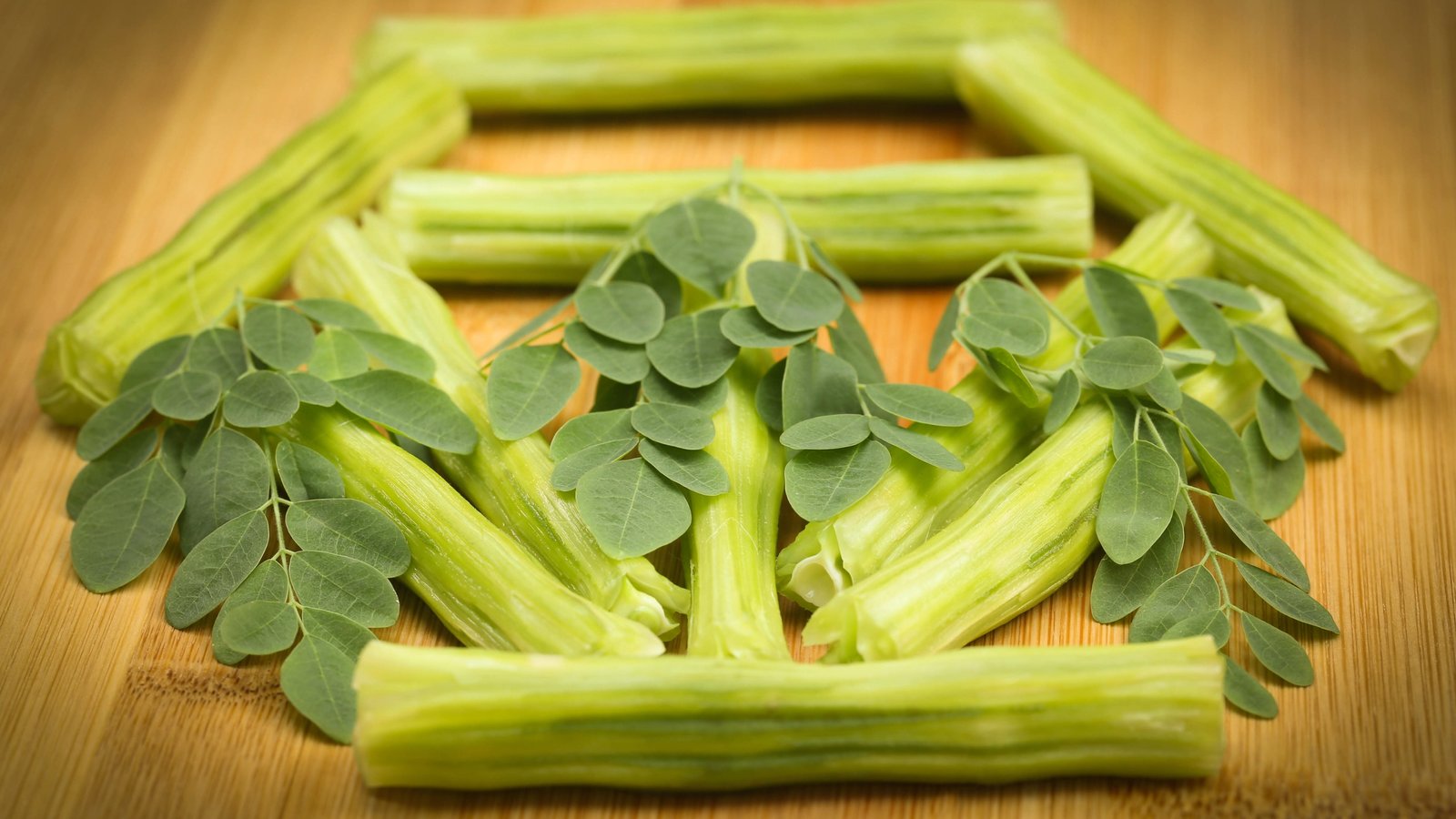
"The Indian subcontinent is home to the quick-growing, drought-resistant Moringa oleifera, also referred to as the drumstick tree. Belonging to the Moringaceae family, it is highly valued in Ayurveda and other traditional medicine systems for its nutritional, anti-inflammatory, antioxidant, antimicrobial, and anti-diabetic properties. Every part of the plant—leaves, seeds, pods, bark, and roots—is used medicinally or nutritionally."
What is Moringa (Sigru) in Ayurveda?
Moringa, known as Sigru in Ayurveda, is a highly valued medicinal plant used for thousands of years in traditional Indian medicine. Almost every part of the Moringa tree, including leaves, seeds, pods, bark, and roots, is used for therapeutic purposes. In Ayurveda, Sigru is known for its detoxifying, anti-inflammatory, antioxidant, and immunity-boosting properties. It is commonly used to balance Vata and Kapha dosha and supports overall wellness naturally.
Nutritional Profile of Moringa
Moringa is known as a “superfood” because it is rich in essential nutrients. It contains:
- High levels of plant-based protein
- Vitamins A, C, E, and B-complex
- Minerals like calcium, iron, potassium, and magnesium
- Natural antioxidants and amino acids
Due to this rich nutritional profile, Moringa is widely used in Ayurvedic supplements, herbal powders, capsules, and functional foods.
Moringa oleifera Scientific Name
- Kingdom: Plantae
- Phylum: Angiosperms
- Class: Eudicots
- Order: Brassicales
- Family: Moringaceae
- Genus: Moringa
- Species: Moringa oleifera
Moringa oleifera Common Name
- English: Drumstick Tree, Horseradish Tree, Miracle Tree
- Sanskrit: Sigru, Shobhanjana
- Hindi: Sahjan
- Tamil: Murungai
- Telugu: Munagakaya
- Malayalam: Muringa
- Kannada: Nugge Mara
- Bengali: Sajna
- Marathi: Shevga
- Gujarati: Saragavo
Health Benefits of Moringa (Sigru)
Moringa offers multiple health benefits when used regularly as per Ayurvedic guidance:
- Supports natural immunity
- Helps in detoxification of the body
- Supports healthy digestion
- Helps in maintaining normal blood sugar levels
- Supports joint and muscle health
- Promotes healthy skin and hair
- Helps reduce weakness and fatigue
- Supports liver and kidney health
Moringa oleifera Uses
- Nutritional Supplement - Leaves are rich in vitamins (A, C, B6), iron, calcium, and proteins, often used as a superfood.
- Anti-inflammatory and Antioxidant - Contains quercetin and chlorogenic acid, reducing oxidative stress and inflammation.
- Blood Sugar Regulation - Seeds and leaves have hypoglycemic properties useful in managing type 2 diabetes..
- Cardiovascular Health - Helps reduce cholesterol and blood pressure, improving heart health.
- Digestive Support - Bark and roots help in treating constipation, gastritis, and ulcers.
- Joint and Bone Health - Traditionally used to treat arthritis, swelling, and bone weakness..
- Reproductive Health - Improves libido, regulates menstrual cycles, and enhances lactation in mothers..
Common Uses of Moringa in Daily Life & Home Remedies
Moringa is widely used in Indian homes and Ayurvedic practices:
- 🥄 Moringa Powder: Added to smoothies, juices, soups, and curries
- 💊 Moringa Capsules/Tablets: Used as daily herbal supplement
- 🥗 Fresh Moringa Leaves: Used in sabzi, dal, and soups
Moringa for Skin, Hair & Beauty Care
Moringa is widely used in natural beauty and cosmetic products:
- Helps improve skin glow and hydration
- Supports acne-prone and sensitive skin
- Helps reduce dandruff and hair fall
- Supports stronger hair roots
- Used in herbal face packs, hair oils, and shampoos
References
- Ayurvedic Pharmacopoeia of India, Govt. of India, Ministry of AYUSH.
- Fahey, J. W. (2005). Moringa oleifera: A review of the medical evidence for its nutritional, therapeutic, and prophylactic properties. Part 1. Trees for Life Journal.
- Anwar, F., Latif, S., Ashraf, M., & Gilani, A. H. (2007). Moringa oleifera: A food plant with multiple medicinal uses. Phytotherapy Research, 21(1), 17–25.
- Leone, A., Spada, A., Battezzati, A., Schiraldi, A., Aristil, J., & Bertoli, S. (2015). Cultivation, genetic, ethnopharmacology, phytochemistry and pharmacology of Moringa oleifera leaves: An overview. International Journal of Molecular Sciences, 16(6), 12791–12835.
- The Wealth of India (Raw Materials), Vol. 6: L-M, CSIR, New Delhi.
- Chopra, R.N., Nayar, S.L., & Chopra, I.C. (1956). Glossary of Indian Medicinal Plants. CSIR, New Delhi.
- Fuglie, L. J. (2001). The Miracle Tree: Moringa oleifera: Natural Nutrition for the Tropics. Church World Service, Dakar.



 My Account
