 My Account
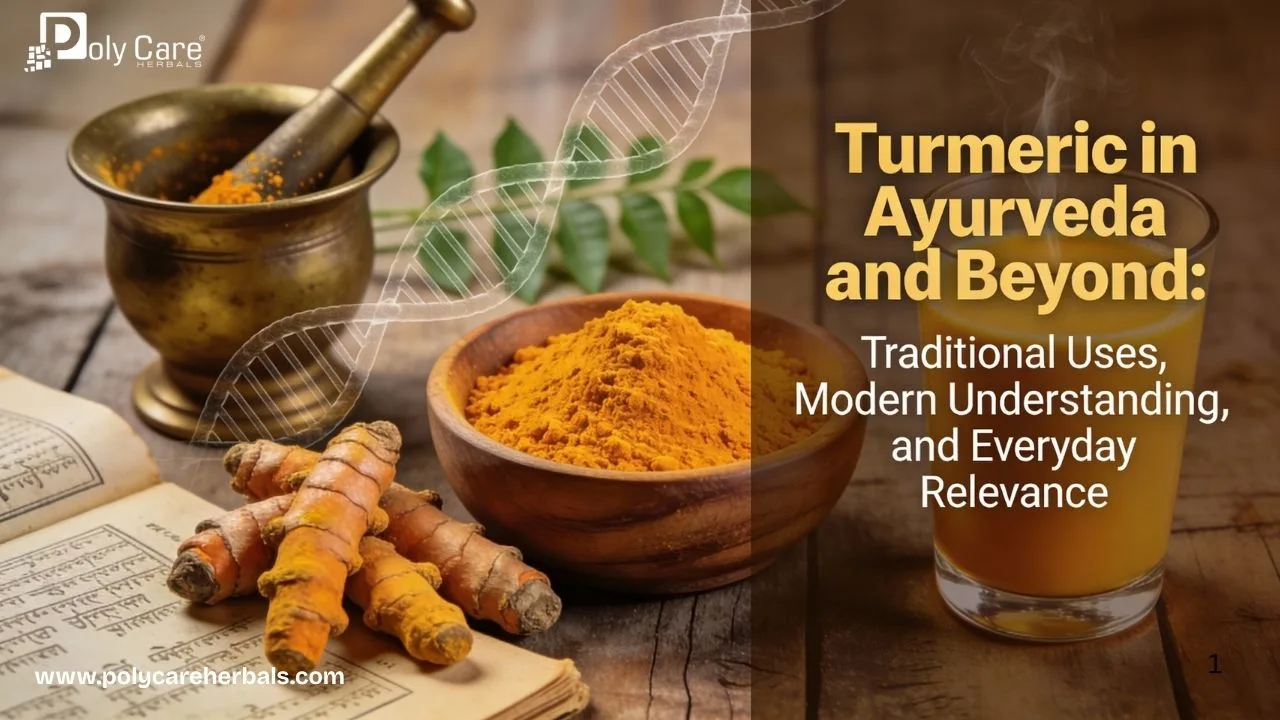
Turmeric, popularly known as Haldi, is one of the most trusted natural substances in Indian tradition. For centuries, it has been used not only in cooking but also in Ayurveda, traditional Indian medicine, daily home remedies, and wellness practices.
When people search for “turmeric in Ayurveda,” they are usually looking for clear, reliable information—how Ayurveda explains turmeric, why it is important, and where else it is used apart from food. This blog is written as a complete informational guide, based on Ayurvedic understanding and modern relevance, explained in simple and easy Indian English.
Understanding Turmeric from the Ayurvedic View
In Ayurveda, turmeric is known as Haridra. It is considered a powerful and versatile herb because it works on the body in a balanced and holistic way.
According to the Ayurvedic view on turmeric, it has:
- Katu and Tikta Rasa (pungent and bitter taste)
- Ushna Virya (warming nature)
- Katu Vipaka (post-digestive effect)
These qualities make turmeric especially useful for maintaining balance in the body, particularly related to Kapha and Vata doshas. Ayurveda does not see turmeric as a quick remedy but as a herb that supports long-term balance when used correctly.
Why Turmeric Is Important in Ayurveda
One of the main reasons turmeric holds such importance in Ayurveda is because it works at multiple levels of the body rather than focusing on just one area.
Role of Turmeric in Ayurveda
From an Ayurvedic perspective, turmeric is traditionally used to support:
- Healthy digestion and metabolism
- Internal cleansing concepts
- Skin health and clarity
- Natural immunity and strength
- Overall body balance
Because of this wide range of uses, turmeric is included in many Ayurvedic medicines and formulations, often in combination with other herbs.
This explains why turmeric is important in Ayurveda and why it continues to be used even today.
Turmeric Uses in Ayurveda: Traditional Explanation
Turmeric uses in Ayurveda are based on classical knowledge passed down through ancient texts like Charaka Samhita and Sushruta Samhita.
Traditional Uses of Turmeric in Ayurvedic Medicine
- Used in churna (powder) formulations
- Included in lepa (herbal paste) for external application
- Used in tailam (herbal oils)
- Combined with herbs like Amla, Neem, Guduchi, and Ginger
- Used in formulations related to skin and internal balance
Ayurveda focuses on how turmeric works with other herbs, not as a single isolated ingredient. This balanced combination approach is one of the key principles of Ayurvedic medicine.
Haridra in Ayurveda: Classical References
Haridra in Ayurveda is described as a herb that supports purification and balance. Ancient texts mention turmeric in the context of:
- Supporting healthy blood-related functions (Rakta concept)
- Helping maintain clear skin
- Supporting digestion and internal heat (Agni)
These references show that turmeric was never just a kitchen spice—it was always respected as a medicinal herb.
Haldi Uses in Ayurvedic Medicine vs Daily Home Use
Many people confuse daily home use of haldi with Ayurvedic medicine. While both are connected, there is a clear difference.
Ayurvedic Medicine Use
- Based on classical formulations
- Used in measured and balanced combinations
- Focused on long-term body harmony
Traditional Home Use
- Turmeric milk during seasonal changes
- Turmeric paste for skin rituals
- Use in cooking for general wellness
Both practices are rooted in traditional Indian knowledge, but Ayurvedic medicine follows a more structured approach.
Read More: Turmeric / Haldar (Curcuma longa Linn.)
Curcuma Longa in Ayurveda and Modern Science
The botanical name of turmeric is Curcuma longa. While Ayurveda uses turmeric as a whole herb, modern science focuses mainly on curcumin, its active compound.
Modern Understanding Includes:
- Antioxidant properties
- Support for inflammatory balance
- Role in immunity-related research
This modern research supports many traditional Ayurvedic observations, even though the approach is different. Ayurveda looks at overall balance, while science studies specific compounds.
Turmeric Medicinal Properties: Ayurvedic vs Modern View
Turmeric medicinal properties are explained differently in Ayurveda and modern medicine, but the core idea remains similar—supporting natural balance.
Ayurvedic Explanation:
- Balances doshas
- Supports Agni (digestive fire)
- Helps maintain internal cleanliness
Modern Explanation:
- Antioxidant support
- Anti-inflammatory potential
- Immune system support
Together, these perspectives explain why turmeric continues to be relevant across generations.
Turmeric Uses Beyond Cooking
Although turmeric is widely used in Indian cooking, its role goes far beyond the kitchen.
Traditional Indian Medicine & Lifestyle Uses
- Part of religious and cultural rituals
- Used in traditional skincare routines
- Included in wellness practices
- Used in natural personal care products
These turmeric uses beyond cooking show how deeply connected it is to Indian life and tradition.
Ayurvedic Herbs and Spices: Turmeric’s Special Position
Among all Ayurvedic herbs and spices, turmeric holds a special position because it connects food, medicine, and lifestyle.
Unlike many herbs that are used only medicinally, turmeric is:
- Easy to include in daily life
- Safe when used traditionally
- Accepted across cultures
- Supported by both tradition and modern research
This makes turmeric one of the most universally respected herbs.
Common Misunderstandings About Turmeric
One common myth is that turmeric alone can solve every health problem. Ayurveda clearly states that no single herb works alone.
Important points to remember:
- Balance is more important than quantity
- The combination of herbs matters
- Individual body type (Prakriti) matters
- Correct usage is essential
Understanding this helps people use turmeric more responsibly.
Final Conclusion
Turmeric is not just a spice or a trend—it is a timeless part of Ayurveda, traditional Indian medicine, and everyday Indian life. Its importance comes from centuries of use, cultural trust, and modern understanding.
Whether someone is learning about turmeric in Ayurveda, its traditional uses, or its relevance beyond cooking, turmeric continues to stand as a bridge between ancient wisdom and modern awareness.
Frequently Asked Questions (FAQs)
Turmeric is called Haridra in Ayurveda.
It is used in powders, oils, pastes, and combined herbal formulations.
Because it supports digestion, skin health, immunity, and internal balance.
No, it is used both medicinally and in daily lifestyle practices.
Ayurveda explains it through dosha balance, Agni support, and purification concepts.
ayurvedic herbs and spices ayurvedic view on turmeric curcuma longa in ayurveda haldi uses in ayurvedic medicine haridra in ayurveda how turmeric is used in ayurveda role of turmeric in ayurveda traditional indian medicine turmeric traditional uses of turmeric in indian medicine turmeric ayurvedic benefits explained turmeric in ayurveda turmeric medicinal properties turmeric traditional uses turmeric uses beyond cooking turmeric uses in ayurveda why turmeric is important in ayurveda