Free Shipping On Above Order Value Rs. 500
Free Shipping On Above Order Value Rs. 500


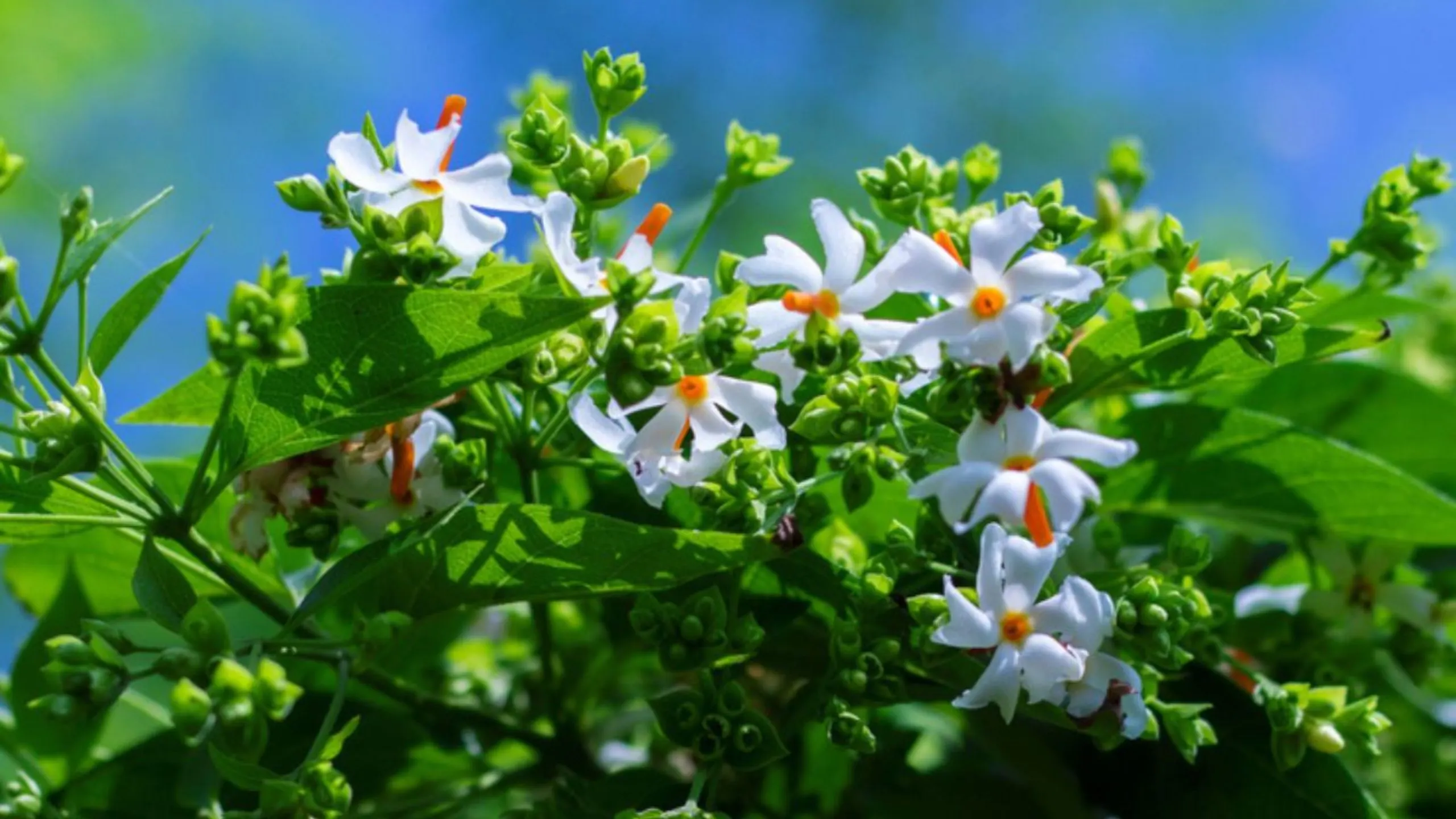
Harsingra (Nyctanthes arbor-tristis L.), commonly known as Harsingar, Parijat, Night-flowering Jasmine, or Coral Jasmine, is a small flowering tree or shrub belonging to the Oleaceae family. The plant is recognized for its fragrant white flowers with orange-red centers, which typically open at night and fall by morning.
In traditional Indian systems of medicine, including Ayurveda and folk practices, different parts of Harsingra have been documented for various traditional uses. Its botanical identity, regional names, and traditional applications have also been discussed in ethnobotanical and pharmacological literature.
| SR | Classification | Details |
| NO. | ||
| 1 | Scientific name | Nyctanthes arbor-tristis L. |
| 2 | Kingdom | Plantae |
| 3 | Clade / Phylum | Angiosperms |
| 4 | Class | Eudicots |
| 5 | Family | Oleaceae |
| 6 | Genus | Nyctanthes |
| 7 | Species | Nyctanthes arbor-tristis L. |
| 8 | Flowering pattern | Flowers commonly open at night |
| 9 | Plant type | Small tree / shrub |
| SR | Language | Name |
| NO. | ||
| 1 | English | Night-flowering Jasmine, Coral Jasmine |
| 2 | Sanskrit | Pārijāta, Sephalika |
| 3 | Hindi | Harsingar, Harshingar, Parijat |
| 4 | Bengali | Shiuli, Shefali |
| 5 | Tamil | Pavazhamalli |
| 6 | Telugu | Parijatham |
| 7 | Kannada | Parijata |
| 8 | Malayalam | Pavizamalli |
| SR | Traditional use | Traditional context |
| NO. | ||
| 1 | Fever | Traditionally documented in preparations used for fever |
| 2 | Joint & mobility support | Traditionally associated with rheumatic and joint-related complaints |
| 3 | Digestive support | Traditionally used in some preparations related to digestive health |
| 4 | Skin-related traditional use | Documented in traditional practices for certain skin concerns |
Yes. Harsingra, Harsingar, Harshingar, and Parijat are commonly used names associated with Nyctanthes arbor-tristis L. in different Indian languages and contexts. The plant is also widely known in English as night-flowering jasmine or coral jasmine.
This guide has been prepared using botanical references, Ayurvedic literature and published research on Nyctanthes arbor-tristis L. The information distinguishes traditional uses from findings reported in modern research.
Reviewed by: Polycare Herbals Editorial Team
Last updated: August 2026
1. What is Harsingra?
Harsingra is a small flowering tree known scientifically as Nyctanthes arbor-tristis L., commonly recognized for its fragrant white flowers with orange-red centers.
2. Is Harsingra the same as Harsingar?
Yes. Harsingra and Harsingar are commonly used names for the same plant, Nyctanthes arbor-tristis L.
3. What is the scientific name of Harsingra?
The scientific name of Harsingra is Nyctanthes arbor-tristis L., belonging to the Oleaceae family.
4. What is Harsingra also called in India?
Harsingra is also known as Harsingar, Harshingar, Parijat, Parijata, Shiuli, and Shefali in different Indian languages and regions.
5. What is Parijat called in English?
Parijat is commonly known in English as night-flowering jasmine or coral jasmine.
6. Which family does Nyctanthes arbor-tristis belong to?
Nyctanthes arbor-tristis belongs to the Oleaceae family, which includes several flowering plant species.
7. What are the traditional uses of Harsingra?
Harsingra has been traditionally used in Ayurveda and folk practices for various purposes, including fever-related preparations and joint and digestive health.
8. What parts of Harsingra are traditionally used?
Different parts of Harsingra, including its leaves, flowers, bark, seeds, and roots, have been documented in traditional practices.
9. What does research say about Nyctanthes arbor-tristis?
Research has investigated Nyctanthes arbor-tristis for its phytochemical composition, traditional uses, and various biological activities.

Moving your card details to a much more secured place

100% Payment Protection. Easy Return Policy

Fast, reliable delivery from global warehouses

 My Account
